
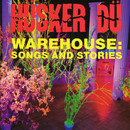
Warehouse: Songs And Stories (Black Friday)
Husker DuLPA
- These Important Years
- Charity, Chastity, Prudence, And Hope
- Standing In The Rain
- Back From Somewhere
- Ice Cold Ice
LPB
- You’re A Soldier
- Could You Be The One
- Too Much Spice
- Friend, You’ve Got To Fall
- Visionary
- She Floated Away
LPC
- Bed Of Nails
- Tell You Why Tomorrow
- It’s Not Peculiar
- Actual Condition
- No Reservations
LPD
- Turn It Around
- She’s A Woman (And Now He’s A Man)
- Up In The Air
- You Can Live At Home
Hüsker Dü laid the groundwork for the 1990s alternative-rock boom when it became one of the first DIY-era American indie bands to land a major-label deal. The Minnesota-based power trio's influential sound expanded the parameters of punk by incorporating hummable pop melodies and introspective lyrics into a thick hardcore foundation. (Excerpt from the Rolling Stone Encyclopedia of Rock & Roll)
Reissue of Husker Du’s 1987 6th and final studio album. As a whole, it's cleaner and more produced (with multi-tracked guitars and vocal, various percussion techniques, and endless studio effects) than any of their records, and would have seemed out of place a mere two years before its release. However, Flip Your Wig and Candy Apple Grey both suggested this full-fledged pop production, and it’s to Hüsker Dü's credit that they never sound like they are selling out with Warehouse. What they do sound like is breaking up. Although there was a schism apparent between Bob Mould and Grant Hart on Candy Apple Grey, they don't even sound like they are writing for the same band on Warehouse. But the individual songs on the album are powerhouses in their own right, as both songwriters exhibit a continuing sense of experimentation -- Hart writes a sea shanty with "She Floated Away" and uses bubbling percussion on "Charity, Chastity, Prudence, and Hope," while Mould nearly arrives at power pop with "Could You Be the One?" and touches on singer/songwriter-styled folk-rock with "No Reservations." Warehouse doesn't have the single-minded sense of purpose or eccentric sprawl of Zen Arcade, but as a collection of songs, it's of the first order. Furthermore, its stylish production -- which makes pop concessions without abandoning a punk ethos -- pointed the way to the kind of "alternative" rock that dominated the mainstream in the early '90s. In all, it was a fine way for one of the most important bands of the '80s to call it a day. (Allmusic.com)