
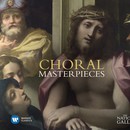
Choral Masterpieces
Various ArtistsCD1
- VIVALDI - Gloria in excelsis Deo from Gloria in D major, RV 589
- BACH - Jesu, Joy of Man’s Desiring from Cantata “Herz und Mund und Tat und Leben”, BWV 147
- HANDEL - Hallelujah Chorus (ed. Lam)† from Messiah, HWV 56
- ALLEGRI - Miserere mei, Deus (vv. 1–4, 17–20)
- BACH - Magnificat anima mea from Magnificat in D major, BWV 243
- MOZART - Lacrimosa (ed. Beyer) from Requiem, K626
- MOZART - Regina coeli from Regina coeli, K127
- HAYDN - The heavens are telling† from The Creation, Hob.XXI:2
- SCHUBERT - Heilig, heilig, heilig from Deutsche Messe, D872
- BEETHOVEN - Ode to Joy (arr. Bates) from Symphony No.9 in D minor, op.125 “Choral”
- BRAHMS - Wie lieblich sind deine Wohnungen from Ein deutsches Requiem, op.45
- PUCCINI - Gloria in excelsis Deo — In terra pax — Laudamus te
- BERLIOZ - IV. Tu, Christe, Rex Gloriae (Hymn) — V. Te ergo quaesumus (Prayer)
- FRANCK - Panis angelicus (arr. Sandré)
- FAURE - Cantique de Jean Racine, op.11
- RACHMANINOV - Ave Maria fromVespers, op.37
- FAURE - In paradisum from Requiem, op.48
- GORECKI - Totus tuus, op.60 (extract)
- PARRY - Jerusalem
CD2
- CHARPENTIER - Pleni sunt coeli et terra† from Te Deum in D major, H146
- BACH - Zion hört die Wächter singen† from Cantata “Wachet auf, ruft uns die Stimme”, BWV 140
- HANDEL - Zadok the Priest, HWV 258
- BACH - Cum sancto spiritu from Mass in B minor, BWV 232
- PURCELL - Thou knowest, Lord† from Music for the Funeral of Queen Mary, Z860
- HANDEL - For unto us a child is born (ed. Lam)† from Messiah, HWV 56
- HASSLER/BACH - O sacred head, sore wounded (“Passion Chorale”)
- MOZART - Ave verum corpus, K618
- HAYDN - Awake the harp (ed. Temperley) from The Creation, Hob.XXI
- BEETHOVEN - Die Ehre Gottes aus der Natur, op.48 no.4 (“Die Himmel rühmen”)
- MENDELSSOHN - And then shall your light break forth† from Elijah, op.70
- BERLIOZ - L’Adieu des bergers (Shepherds’ Farewell)† from L’Enfance du Christ, op.25
- DURUFLÉ - Agnus Dei (reduced-orchestration version) from Requiem, op.9
- POULENC - Laudamus te from Gloria, FP 177
- BERNSTEIN - I. Maestoso ma energico — Allegro molto
- TAVENER - The Lamb
- BARBER - Agnus Dei, op.11 (Adagio for Strings)
- RUTTER - Requiem aeternam from Requiem
- JENKINS - Agnus Dei fromThe Armed Man (A Mass for Peace)
- VERDI - Dies irae (extract)† from Messa da Requiem
- ORFF - O Fortuna from Carmina Burana
For centuries the Christian Church has exerted a powerful influence on choral composition, nurturing and continuing to inspire works that are spiritually oriented or which fulfil a devotional function. Spanning over 300 years of music, from the sacred ritual of Allegri’s Miserere to the prayerful intensity of Górecki’s Totus tuus, this release brings together some of the finest and most affecting compositions in the Western choral tradition, complemented by Renaissance paintings from the National Gallery depicting various scenes from the equally captivating story of the Passion of Christ.
The works on this album arise from mankind’s innate need to sing in groups, to share a familiar yet ultimately mysterious collective experience through music. They also belong to the mighty tree of Western choral composition, its roots tended and sustained for centuries by the Christian Church, its many branches touching the heart of today’s secular concert life. While the style of individual pieces varies, each is connected to the other by a common thread traceable to such enduring symbols as the angel choirs of the Bible, the ancient Greek choreia and the choral ceremonies of so-called primitive societies.
Sacred ritual gave birth to Gregorio Allegri’s Miserere. The work was created in the late 1630s for Holy Week services at the Sistine Chapel, where its composer directed the papal choir. The Miserere’s mix of austere choral chant and flourishes for solo voices captivated visitors to the Vatican. Their reports inspired legends about its “secret” music, known only to the Pope’s choristers and jealously guarded by them: anyone who attempted to perform the work outside the Vatican’s walls, it was said, faced excommunication. The version of the Miserere most often heard today, with its soaring solo melodies and hypnotic embellishments, was assembled by a German musicologist in the 1930s.
While Allegri’s greatest hit reflects the intimacy of spiritual experience, Johann Sebastian Bach’s Magnificat opens with an uplifting festive celebration of a central text in Christian worship, the song of the Virgin Mary to her cousin Elizabeth. The sense of delight in divine salvation is also palpable in the “Hallelujah Chorus” from Handel’s Messiah, the opening of Vivaldi’s Gloria and Bach’s jubilant “Cum sancto spiritu” from his Mass in B minor. Trumpets and drums, traditionally associated with the power of kings, are used in each piece to underline God’s authority, to elicit contemplation of the sacred realm.
Several of the works on this album deal with earthly suffering. Mozart’s early biographers claimed that he laboured on his Requiem until moments before his death, completing the first eight bars of the work’s Lacrimosa before fate intervened. The myth, retold and elaborated many times over the past two centuries, matches the music’s reflective mood and intense meditation on the sharpness of grief. Likewise Purcell’s short anthem for the funeral of Queen Mary in 1695, Thou knowest, Lord, addresses death with a fine blend of compassion, reverence and awe. Church and state remained significant forces in the commissioning of new choral music throughout the nineteenth century’s Age of Revolution and beyond. And yet composers were increasingly engaged to write for secular choral societies, civic festivals and public concert halls. Choirs such as London’s Royal Choral Society, founded in 1871, and other large groups of dedicated amateur singers satisfied the public’s apparently insatiable hunger for choral compositions. Choral societies from Sheffield to Sydney gradually forged an international repertoire of acknowledged masterworks, Messiah, Mendelssohn’s Elijah, Haydn’s The Creation, Beethoven’s “Choral” Symphony and Brahms’s A German Requiem essential among them. Works commissioned for choirs large and small have helped rejuvenate the great choral tradition in recent years, connecting audiences worldwide with the eloquent simplicity of Tavener’s The Lamb, Górecki’s Totus tuus and Karl Jenkins’s The Armed Man, consoling icons of peace in troubled times.