
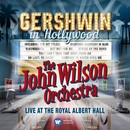
Gershwin in Hollywood (Live at the Royal Albert Hall)
John Orchestra Wilson- Overture Orchestra / arr. Ray Heindorf (Rhapsody in Blue, 1945)
- Treat Me Rough Louise Dearman & Matthew Ford / arr. Sy Oliver & Alex Stordahl (Girl Crazy, 1943)
- But Not For Me Louise Dearman / arr: Conrad Salinger (Girl Crazy, 1943)
- Slap That Bass Matthew Ford / arr. Johnny Green (Shall We Dance, 1937)
- They Can't Take That Away From Me Matthew Ford / arr. Conrad Salinger (The Barkleys of Broadway, 1949)
- Strike Up The Band Louise Dearman & Matthew Ford /arr. Leo Arnaud & Conrad Salinger (Strike Up The Band, 1940)
- Funny Face Matthew Ford / additional lyrics by Roger Edens & Leonard Gershe arr. Conrad Salinger (Funny Face, 1957)
- How Long Has This Been Going On? Louise Dearman / arr. Conrad Salinger (Funny Face, 1957)
- Let's Kiss and Make Up Matthew Ford / arr. Alexander Courage and Lloyd "Skip" Martin (Funny Face, 1957)
- Aren't You Kind Of Glad We Did? Louise Dearman & Mathew Ford / arr. Herbert Spencer (The Shocking Miss Pilgrim, 1947)
- Oh Lady, Be Good Orchestra / arr. Jerry Gray (Artie Shaw's Symphony of Swing, 1939)
- The Man I Love Louise Dearman / arr. Ray Heindorf (The Helen Morgan Story, 1957)
- 'S Wonderful Matthew Ford / arr. Conrad Salinger & Johnny Green (An American In Paris, 1951)
- For You, For Me, For Evermore Louise Dearman & Matthew Ford / arr. Herbert Spencer (The Shocking Miss Pilgrim, 1947)
- Shall We Dance Matthew Ford /arr. Herbert Spencer, Fud Livingstone & Robert Russell Bennett (Shall We Dance, 1937)
- Someone To Watch Over Me Louise Dearman / arr. Lennie Hayton (Star!, 1968)
- Clap Yo' Hands Louise Dearman & Matthew Ford / arr. Lloyd "Skip" Martin (Funny Face, 1957)
“Rumours about highbrow music ridiculous — Stop — Am out to write hits”
So wrote George Gershwin in 1936 to the agent Archie Selwyn, who had informed the composer that his Hollywood producers had the jitters. Why? Because the previous year, George and his lyricist elder brother Ira had done something unprecedented by leaping from multiple Broadway musical hits to the considerably more rarified world of opera with Porgy and Bess.
The producers needn’t have worried. The songs that George and Ira wrote for the picture in question, Shall We Dance, didn’t just serve the movie, they swiftly became standards that are still regularly performed, from “Let’s Call The Whole Thing Off” to “They Can’t Take That Away From Me”. It helps, of course, if you have Fred Astaire and Ginger Rogers singing and dancing them into audiences’ heads and hearts, but the detailed delight of the songs belongs to the writers.
It’s no surprise that they wound up in Hollywood. When sound and song arrived in motion pictures at the end of the 1920s, two things rocketed to the front of producers’ minds: musicals would be the next big thing and the Gershwins would be hired, since by January 1928 they were the toast of New York’s jazz age. They didn’t just have one show pulling in the crowds, they had three running simultaneously.
Just four years earlier, they’d made it to Broadway with their first show together, Lady, Be Good!. It made stars out of its brother-and-sister duo Fred and Adele Astaire and introduced songs that became classics in the title number and “Fascinating Rhythm”. By the time Hollywood came calling, the brothers had plenty more under their belts including “Someone To Watch Over Me”, “Funny Face”, “‘S Wonderful”, “Let’s Kiss And Make Up” and “How Long Has This Been Going On?”.
For their first trip west in 1930 they were paid an immense amount (George $70,000 and Ira $30,000 — together around 1.4 million dollars in today’s terms) but the movie, Delicious, signally failed to live up to its title. They headed back home as fast as possible.
Their return to Hollywood was happier. Shall We Dance, released in May 1937, saw them re-teaming with Fred Astaire. Six new songs made it into the film, including “They Can’t Take That Away From Me”, which wound up being Oscar-nominated. George also wrote the movie’s orchestral underscoring, a job traditionally handled by studio music staff. They then hurled themselves into two more movies, A Damsel in Distress (another Astaire picture) and The Goldwyn Follies.
The fearsome intensity with which George wrote was giving him crippling headaches. At least, that was what his friends and doctors said following years of his complaining plus four days of tests at Los Angeles’ Cedars of Lebanon hospital. He left there on 26 June, 1937. On Friday 9 July he fell unconscious and was re-admitted. A five-hour brain operation in the early hours of Sunday morning revealed an inoperable brain tumour. At 10:35am, he died.
For the movies, this was far from the end. In 1945, Warner Bros. turned his life-story into the biopic Rhapsody in Blue. The best, however, was yet to come. MGM won six Oscars in 1952 including Best Picture for Vincente Minnelli directing Gene Kelly and Leslie Caron in the lavish all-Gershwin-fest An American in Paris. There was equal glamour and dash in Stanley Donen’s satirical romance Funny Face (1957), which teamed Fred Astaire, Audrey Hepburn and Kay Thompson in a score peppered with Gershwin greats.
Most poignant of all was the moment, ten years earlier, when Ira began taking up melodies that George had abandoned and created nine new Gershwin songs for the Betty Grable picture The Shocking Miss Pilgrim. It was a return to the job he had loved for so long: writing lyrics to George’s music.