
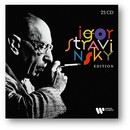
Igor Stravinsky Edition (CD23)
Igor Stravinsky & Soulima StravinskyCD1
- Scherzo fantastique, Op.3 (1908)
- Feux d’artifice, Op.4 (1908)
- L’Oiseau de feu · The Firebird, complete ballet (1910)
- I. Introduction
- II. Le Jardin enchanté de Kachtcheï · Kashchei’s enchanted garden
- III. Apparition de l’oiseau de feu poursuivi par Ivan Tsarévitch · Appearance of the Firebird pursued by Ivan Tsarevich
- IV. Danse de l’oiseau de feu · Dance of the Firebird
- V. Capture de l’oiseau de feu · Ivan Tsarevich captures the Firebird
- VI. Supplications de l’oiseau de feu · Supplications of the Firebird
- VII. Apparition des 13 princesses enchantées · Appearance of 13 enchanted princesses
- VIII. Jeu des princesses avec les pommes d’or · The Princesses’ Game with the Golden Apples
- IX. Brusque apparition d’Ivan Tsarévitch · Sudden appearance of Ivan Tsarevich
- X. Khovorod : Ronde des princesses · The princesses’ Round Dance
- XI. Lever du jour : Ivan Tsarévitch entre dans le palais de Kachtcheï · Daybreak: Ivan Tsarevich enters Kashchei’s Palace
- XII. Carillon magique et capture d’Ivan Tsarévitch · Magic carillon and capture of Ivan Tsarevich
- XIII. Arrivée de Kachtcheï l’immortel · Arrival of Kashchei the Immortal
- XIV. Apparition de l’oiseau de feu · Appearance of the Firebird
- XV. Danse de la suite de Kachtcheï enchantée par l’oiseau de feu · Dance of Kashchei’s retinue under the Firebird’s spell
- XVI. Danse infernale de tous les sujets de Kachtcheï · Infernal dance of all of Kashchei’s subjects
- XVII. Berceuse (L’Oiseau de feu) · Lullaby (The Firebird)
- XVIII. Mort de Kachtcheï · Kashchei’s death
- XIX. Disparition du palais et des sortilèges, animation des chevaliers pétrifiés. Allégresse générale · Disappearance of the palace and dissolution of Kashchei’s enchantments, animation of the petrified warriors. General thanksgiving
CD2
- L’Oiseau de feu · The Firebird (1910, Ballet Suite 1919)
- I. Les Jardins enchantés du roi Kachtcheï · Kashchei’s enchanted gardens
- II. L’Oiseau de feu et sa danse · Dance of the Firebird
- V. Khovorod : ronde des princesses · The princesses’ Round Dance
- VI. Danse infernale du roi Kachtcheï et de tous ses sujets · Infernal dance of all of Kashchei’s subjects
- VII. Berceuse · Lullaby
- VIII. Finale – Allégresse Générale · General thanksgiving
- I. Fête populaire de la Semaine Grasse · The Shrovetide Fair
- II. Le tour de passe-passe · The Magic Trick
- III. Danse russe · Russian dance
- Tableau 2
- IV. Chez Petrouchka · Petrushka’s room
- Tableau 3
- V. Chez le Maure · The Blackamoor’s room
- VI. Danse de la ballerine · Dance of the Ballerina
- VII. Valse : La ballerine et le Maure · Waltz: The Ballerina and the Moor
- Tableau 4
- VIII. Fête populaire de la Semaine Grasse (vers le soir) · The Shrovetide Fair towards evening
- IX. Danse des nounous · The Wet-Nurses’ Dance
- X. Le Paysan et l’ours · The Peasant and the Bear
- XI. Le Marchand fêtard et deux Tziganes · The Reveling Merchant and two Gipsy Women
- XII. Danse des cochers et des palefreniers · Dance of the Coachmen and the Grooms
- XIII. Les Déguisés · The Mummers
- XIV. Mort de Petrouchka · Petrushka’s death
CD3
- Tableau 1
- I. Fête populaire de la Semaine Grasse · The Shrovetide Fair
- II. Le tour de passe-passe · The Magic Trick
- III. Danse russe · Russian dance
- Tableau 2
- IV. Chez Petrouchka · Petrushka’s room
- Tableau 3
- V. Chez le Maure · The Blackamoor’s room
- VI. Danse de la ballerine · Dance of the Ballerina
- VII. Valse: La ballerine et le Maure · Waltz: The Ballerina and the Moor
- Tableau 4
- VIII. Fête populaire de la Semaine Grasse (vers le soir) · The Shrovetide Fair towards evening
- IX. Danse des nounous · The Wet-Nurses’ Dance
- X. Le Paysan et l’ours · The Peasant and the Bear
- XI. Le Marchand fêtard et deux Tziganes · The Reveling Merchant and two Gipsy Women
- XII. Danse des cochers et des palefreniers · Dance of the Coachmen and the Grooms
- XIII. Les Déguisés · The Mummers
- XIV. Mort de Petrouchka · Petrushka’s death
- Le Sacre du printemps · The Rite of Spring, tableaux de la Russie païenne en deux parties (1913) : Part 1 L’Adoration de la Terre · Adoration of the Earth
- I. Introduction
- II. Les Augures printaniers – Danse des adolescentes · The Augurs of Spring – Dance of the Young Girls
- III. Jeu du rapt · Ritual of Abduction
- IV. Rondes printanières · Spring rounds
- V. Jeu des cités rivales · Ritual of the Rival Tribes
- VI. Cortège du Sage · Procession of the Sage
- VII. Adoration de la Terre (Le Sage) · Adoration of the Earth (The Sage)
- VIII. Danse de la Terre · Dance of the Earth
- Part 2 Le Sacrifice · The Sacrifice
- I. Introduction
- II. Cercles mystérieux des adolescentes · Mystic Circles of the Young Girls
- III. Glorification de l’Élue · Glorification of the Chosen One
- IV. Évocation des Ancêtres · Evocation of the Ancestors
- V. Action rituelle des Ancêtres · Ritual Action of the Ancestors
- VI. Danse sacrale (L’Élue) · Sacrificial Dance (The Chosen One)
CD4
- Le Chant du rossignol · Song of the Nightingale, Symphonic Poem (1917)
- Introduction et Marche chinoise · Introduction & Chinese March
- Chant du rossignol · Song of the Nightingale
- Jeu du rossignol mécanique · Performance of the Mechanical Nightingale
- Pulcinella, Ballet in one act for small orchestra with three solo voices based on music by Giovanni Battista Pergolesi, Domenico Gallo, Fortunato Celleri and Alessandro Parisotti (1920)
- I. Overture. Allegro moderato
- II. Serenata. Larghetto: “Mentre l’erbetta pasce l’agnella” (tenor)
- III. Scherzino. Allegro
- IV. Allegro
- V. Andantino
- VI. Allegro
- VII. Allegretto: “Contento forse vivere” (mezzo-soprano)
- VIII. Allegro assai
- IX. Allegro (alla breve): “Con queste paroline” (bass)
- X. Largo (Trio): “Sento dire no’ncè pace” (all)
- XI. Allegro – alla breve
- XII. Tarentella
- XIII. Andantino: “Se tu m’ami” (mezzo-soprano)
- XIV. Allegro
- XV. Gavotta con due variazioni. Allegro moderato
- XVI. Vivo
- XVII. Tempo di minuetto. Molto moderato (Trio): “Pupilette, fiammette d’amore” (all)
- XVIII. Allegro assai
- Ann Murray mezzo-soprano · Anthony Rolfe Johnson tenor · Simon Estes bass
- Ensemble intercontemporain · Pierre Boulez conductor
- Suite No. 2, for chamber orchestra (1921)
- I. Marche
- II. Valse
- III. Polka
- IV. Galop
- Suite No. 1, for chamber orchestra (1925)
- I. Andante
- II. Napolitana
- III. Española
- IV. Balalaïka
CD5
Les Noces, Russian dance scenes with song and music. French version by Charles Ferdinand Ramuz (1914-1917 & 1919-1923)
- Scene 1: La Tresse · The Tresses
- Scene 2: Chez le marié · At the Bridegroom’s House
- Scene 3: Le Départ de la mariée · The Bride’s Departure
- Scene 4: Le Repas de noces · The Wedding Feast
- Quatre Chants paysans russes « Les Soucoupes » · Four Russian Peasant Songs “Saucers”, original version for women voices a capella (Sung in Russian) (1914-1917)
- I. Près de l’église de Chigisakh · On Saints’ days in Chigisakh
- II. Ovsen
- III. Le Brochet · The Pike
- IV. Monsieur Ventru · Master Portly
- Quatre Chants paysans russes « Les Soucoupes » · Four Russian Peasant Songs “Saucers”, version with a four horns accompaniment (Sung in Russian) (1914-1917 arranged 1954)
- I. Près de l’église de Chigisakh · On Saints’ days in Chigisakh
- II. Ovsen
- III. Le Brochet · The Pike
- IV. Monsieur Ventru · Master Portly
- Le Baiser de la fée, Divertimento, Symphonic Suite (1928-1934, revised 1949)
- I. Sinfonia
- II. Danses suisses
- III. Scherzo
- IV. Pas de deux
CD6
- Apollon musagète · Apollo, Ballet in two scenes for string orchestra (1928, 1947 revised version)
- Tableau 1
- I. Prologue. Naissance d’Apollon
- Tableau 2
- II. Variation d’Apollon (Apollon et les Muses)
- III. Pas d’action (Apollon et les trois Muses : Calliope, Polymnie et Terpsichore)
- IV. Variation de Calliope (L’Alexandrin)
- V. Variation de Polymnie
- VI. Variation de Terpsichore
- VII. Variation d’Apollon
- VIII. Pas de deux (Apollon et Terpsichore)
- IX. Coda (Apollon et les Muses)
- X. Apothéose
- Quatre études, for orchestra (1928)
- I. Danse
- II. Excentrique
- III. Cantique
- IV. Madrid
- Orchestre National de France · Pierre Boulez conductor
- Symphonie de psaumes · Symphony of Psalms, for chorus & orchestra (1930, rev. 1948)
- I. “Exaudi orationem meam”
- II. “Expectans expectavi Dominum”
- III. “Alleluja, laudate Dominum in sanctis ejus”
- Concerto in E-flat major “Dumbarton Oaks”, for chamber orchestra (1938)
- I. Tempo giusto
- II. Allegretto
- III. Rondo: Allegro
CD7
- Credo, for mixed choir a capella (1932)
- Ave Maria, for mixed choir a capella (1934)
- Jeu de cartes, ballet en trois donnes · A Card game, Ballet in three deals (1936)
- I. Première donne · First deal
- II. Deuxième donne · Second deal
- III. Troisième donne · Third deal
- Symphony in C major (1940)
- I. Moderato
- II. Larghetto concertante
- III. Allegretto
- IV. Largo – Tempo giusto
- Danses concertantes (1941-1942)
- I. Marche
- II. Pas d’action
- III. Thème varié
- IV. Pas de deux
- V. Marche
CD8
- Four Norwegian Moods (1942)
- I. Intrada
- II. Song
- III. Wedding Dance
- IV. Cortège
- 5 Circus Polka, composed for a young elephant (1942)
- Scherzo à la russe (Jazz-band version 1944)
- Scherzo à la russe (Orchestral version 1944)
- Symphony in three movements (1945)
- I. = 80
- II. Andante
- III. Con moto
- Concerto in D major, for string orchestra (1946)
- I. Vivace
- II. Arioso (Andantino)
- III. Rondo (Allegro)
- 14 Greeting Prelude (1955)
- Agon, ballet (1957)
- I. Pas de quatre
- II. Double pas de quatre
- III. Triple pas de quatre
- IV. Prelude
- V. Sarabande Step
- VI. Gaillarde
- VII. Coda
- VIII. Interlude
- IX. Bransle simple
- X. Bransle gay
- XI. Bransle double
- XII. Interlude
- XIII. Pas de deux
- XIV. Coda
- XV. Four Duos
- XVI. Four Trios - Coda
CD9
- Pastorale, for vocalise soprano & piano (1907)
- Deux poèmes de Paul Verlaine · Two Poems by Paul Verlaine, Op. 9 for voice & piano (1910, orchestration 1951)
- I. La Bonne chanson
- II. Sagesse
- Le Rossignol · The Nightingale, lyric tale in three acts after Andersen (Igor Stravinsky & Stepan Mitusov - Sung in Russian) (1914)
- Act 1
- Introduction
- « Porté au vent, tombant au loin » (Le Pêcheur, le Rossignol)
- « Ah ! Ah ! Ah ! » (Le Rossignol, le Pêcheur)
- « Voici l’endroit, près de ces arbres » (La Cuisinière, Courtisans, le Chambellan, le Bonze)
- « Beau rossignol, incomparable oiseau » (Le Chambellan, le Bonze, le Rossignol, Courtisans, le Pêcheur)
- Act 2
- « Des feux, des feux, bien vite » (Chorus, Soprano, Tenor, Alto, la Cuisinière, le Chambellan)
- Marche chinoise · Chinese March – « Ô maître magnanime » (Le Chambellan)
- Chanson du rossignol · Song of the Nightingale – « Ah, joie, emplis mon cœur » (Le Rossignol, l’Empereur, les Courtisans, le Chambellan)
- « Au coucher du soleil » (Les Envoyés japonais)
- Jeu du rossignol mécanique · Performance of the mechanical Nightingale - « Psst, psst » (Les Courtisans, l’Empereur, le Chambellan, la voix du Pêcheur)
- Act 3
- « Vois-nous rassemblés » (Spectres, l’Empereur)
- « Ah, me voici, ô prince magnanime » (Le Rossignol, l’Empereur)
- « Ah, j’aime à t’écouter » (La Mort, le Rossignol, l’Empereur)
- Cortège solennel · Solemn procession
- « Bonjour à tous » (L’Empereur, la voix du Pêcheur)
- Act 1
- Renard, histoire burlesque chantée et jouée · Reynard, A burlesque story in song and dance (Igor Stravinsky, translated to French by Charles Ferdinand Ramuz) (1917)
- I. Marche (Entrée des acteurs)
- II. « Où ça, où ça ? »
- III. « Ah ! mon Dieu ! mon dieu ! il me tir’par la queue »
- IV. « Je suis sur mon bâton »
- V. « Ah ! mon Dieu ! mon dieu ! il m’a pris par les ch’veux »
- VI. « Mèr’ Renard, mèr’ Renard, pourquoi nous quitter déjà »
CD10
- L’Histoire du soldat · The Soldier’s Story, for chamber ensemble and three speakers (Charles Ferdinand Ramuz) (1918)
- Part 1
- I. Marche du soldat · The Soldier’s March
- II. Musique de la 1re scène · Music for Scene 1
- III. Reprise de la marche du soldat · The Soldier’s March reprise
- IV. Musique de la 2e scène · Music for Scene 2
- V. Musique de la fin de la 2e scène · Music for the end of Scene 2
- VI. Musique de la 3e scène · Music for Scene 3
- Part 2
- VII. Reprise de la marche du soldat · The Soldier’s March reprise
- VIII. Marche royale · The Royal March
- IX. Petit concert · Little Concert
- X. Trois danses · Three Dances: tango, valse, ragtime
- XI. Danse du Diable · The Devil’s Dance
- XII. Petit choral · Little Chorale
- XIII. Couplets du Diable · The Devil’s song
- XIV. Grand choral · Great Chorale
- XV. Marche triomphale du Diable · Triumphal March of the Devil
- Part 1
CD11
- Oedipus Rex, opera-oratorio in two acts (Igor Stravinsky & Jean Cocteau after Sophocle) (1927)
- Act 1
- « Spectateurs… »
- « Caedit nos pestis » (Chorus)
- « Liberi, vos liberado » (Œdipe, Chorus, le Narrateur)
- « Respondit deus » (Créon)
- « Non reperias vetus scelus » (Œdipe, Chorus)
- « Œdipe interroge la fontaine de vérité » (Le Narrateur, Chorus)
- « Dicere non possum, dicere non licet » (Tirésias, Œdipe)
- « Invidia fortunam odit » (Œdipe)
- « Gloria, gloria, gloria ! » (Chorus)
- Act 2
- « Gloria » (Chorus)
- « La dispute des princes attire Jocaste » (Le Narrateur)
- « Nonn’ erubescite, reges » (Jocaste, Chorus, Œdipe)
- « Ego denem cecidi » (Œdipe, Jocaste)
- « Le témoin du meurtre sort de l’ombre » (Le Narrateur, Chorus, le Messager)
- « Oportebat tacere, nunquam loqui » (Le Berger)
- « Nonne monstrum rescituri » (Œdipe)
- « In monte reppertus est » (Le Berger, le Messager, Chorus, Œdipe)
- « Et maintenant, vous allez entendre le monologue illustre » (Le Messager)
- « Divum Iocastae caput mortuum » (Le Messager, Chorus)
- Act 1
CD12
- Perséphone, melodrama in three parts for speaker, soloists, chorus & orchestra (André Gide) (1933)
- Part I: Perséphone ravie · The Abduction of Persephone
- « Déesse aux mille noms » (Eumolpe, Chorus, Perséphone)
- « Jacinthe, anémone, safran » (Eumolpe, Chorus, Perséphone)
- « Ne cueille pas cette fleur, Perséphone » (Chorus, Eumolpe, Perséphone)
- Part II: Perséphone aux enfers · Persephone in the Underworld
- « Ô peuple douloureux des ombres » (Perséphone, Eumolpe, Chorus)
- « Attentives sur les rives de l’éternité » (Chorus, Perséphone)
- « Tu viens pour dominer » (Chorus, Eumolpe, Perséphone)
- « Viens, Mercure ! » (Chorus, Eumolpe, Perséphone)
- « Si tu contemplais le calice » (Chorus, Perséphone)
- « Pauvres ombres » (Eumolpe, Perséphone, Chorus)
- Part III: Perséphone renaissante · Persephone restored
- « C’est ainsi, nous raconte Homère » (Eumolpe, Chorus)
- « Venez à nous, enfants des hommes » (Chorus)
- « L’ombre encore t’environne » (Chorus)
- « Mère, ta Perséphone à tes vœux s’est rendue » (Perséphone, Eumolpe, Chorus)
- Part I: Perséphone ravie · The Abduction of Persephone
CD13
- The Rake’s Progress, opera in three acts, a fable by W. H. Auden and Chester Kallman (1951)
- Act 1
- Prelude
- Scene 1
- Duet and Trio: “The woods are green, and bird and beast at play” (Anne, Rakewell, Trulove)
- Recitative: “Anne, my dear - Yes, Father?” (Trulove, Anne, Rakewell)
- Recitative and Aria: “Here I stand” (Rackewell)
- “Since it is not by merit we rise or we fall” (Rackewell)
- Recitative: “Tom Rakewell?” (Shadow, Rakewell)
- Recitative and Quartet: “Fair lady, gracious gentlemen, a servant begs your pardon” (Shadow)
- “I wished but once” (Rakewell, Shadow, Anne, Trulove)
- Recitative: “I’ll call the coachman, Sir” (Shadow, Trulove)
- Duettino: “Farewell for now, my heart is with you when you go” (Anne, Rakewell)
- Recitative: “All is ready, sir” (Shadow, Rakewell)
- Arioso and Terzettino: “Dear father Trulove” (Rakewell)
- “Laughter and light, and all charms that endear” (Rakewell, Anne, Trulove, Shadow)
- Scene 2
- “With air commanding and weapon handy we drove in a band through the streets at night” (Chorus)
- Recitative and Scene: “Come, Tom I would fain” (Shadow, Rakewell, Mother Goose)
- Chorus: “Soon dawn will glitter outside the shutter” (Chorus)
- Recitative: “Brothers of Mars” (Shadow)
- Cavatina: “Love, too frequently betrayed for some plausible desire” (Rakewell)
- Chorus: “How sad a song” (Chorus, Mother Goose)
- Chorus: “The sun is bright, the grass is green, lanterloo” (Chorus, Shadow)
- Scene 3
- Recitative and Aria: “Has love no voice?” (Anne)
- “Quietly, night, oh! find him and caress” (Anne, Trulove)
- Recitative: “My father! Can I desert him” (Anne)
- Cabaletta: “I go, I go to him” (Anne)
- Act 2
- Scene 1
- Aria: “Vary the song, O London, change!” (Rakewell)
- Recitative: “Nature, green unnatural mother” (Rakewell)
- Aria: “Always the quarry that I stalk fades or evades me” (Rakewell)
- Recitative: “Master, are you alone?” (Shadow, Rakewell)
- “Come, master, observe the host of mankind” (Shadow)
- Aria: “In youth the panting slaves” (Shadow)
- Duet – Finale: “My tale shall be told” (Rakewell, Shadow)
- Scene 2
- Prelude 1.46
- Recitative and Arioso: “How strange! Although the heart for love dare everything” (Anne)
- “What can this mean?” (Anne)
- Duet: “Anne! here!” (Rakewell, Anne)
- Recitative: “My love, am I to remain in here forever?” (Baba the Turk, Anne, Rakewell)
- Trio: “Could it then have been known” (Anne, Rakewell, Baba)
- Finale: “I have not run away, dear heart” (Baba, Rakewell)
- Scene 1
- Act 1
CD14
- Scene 3
- Aria: “As I was saying” (Baba)
- Baba’s Song: “Come, sweet, come, why so glum?” (Baba)
- Aria: “Scorned! Abused!” (Baba)
- Recitative: “My heart is cold” (Rakewell)
- Pantomime: “Fa lala la lala” (Shadow)
- Recitative – Arioso – Recitative: “O I wish it were true” (Rakewell, Shadow)
- Duet: “Thanks to this excellent device” (Rakewell, Shadow)
- Recitative: “Forgive me, master” (Shadow, Rakewell)
- Act 3
- Scene 1
- “Ruin. Disaster. Shame” (Chorus)
- “Do you know where Tom Rakewell is?” (Anne, Sellem, Chorus)
- Recitative: “Ladies, both fair and gracious, gentlemen” (Sellem)
- Aria and Bidding Scenes: “Who hears me, knows me” (Sellem, Baba, Chorus)
- Aria: “Sold! Annoyed!” (Baba, Rakewell, Shadow, Chorus)
- Recitative: “Now, what was that!” (Baba, Anne, Sellem, Chorus)
- Duet: “You love him, seek to set him right” (Baba, Anne, Sellem, Chorus)
- “I shall go back and grace the stage” (Baba, Anne, Sellem, Chorus)
- Ballad Tune: “If boys had wings and girls had stings” (Rakewell, Shadow, Anne, Baba, Sellem)
- Stretto – Finale: “I go to him” (Anne, Baba, Sellem, Chorus)
- Ballad Tune (reprise): “Who cares a fig for Tory or Whig?” (Rakewell, Shadow, Baba, Chorus)
- Scene 2
- Prelude
- Duet: “How dark and dreadful is this place” (Rakewell, Shadow)
- Recitative: “Very well” (Shadow, Rakewell)
- Duet: “Well then - My heart is wild” (Shadow, Rakewell, Anne)
- “I burn, I burn! I freeze!” (Shadow)
- “With roses crowned” (Rakewell)
- Scene 3
- Arioso: “Prepare yourselves, heroic shades” (Rakewell)
- Dialogue: “Madmen’s words are all untrue” (Rakewell, Chorus)
- Chorus – Minuet: “Leave all love and hope behind” (Chorus)
- Recitative: “There he is” (Keeper, Anne, Rakewell)
- Arioso: “I have waited for thee so long” (Rakewell)
- Duet: “In a foolish dream” (Rakewell, Anne)
- Recitative quasi arioso: “I am exceeding weary” (Rakewell)
- Lullaby: “Gently, little boat” (Anne, Chorus)
- Recitative: “Anne, my dear” (Trulove, Anne)
- Duettino: “Every wearied body must” (Anne, Trulove)
- Finale – Recitative and Chorus: “Where art thou, Venus?” (Rakewell, Chorus)
- Mourning Chorus: “Mourn for Adonis!” (Chorus)
- Epilogue: “Good people, just a moment” (Anne, Baba, Rakewell, Shadow, Trulove)
- Three Songs from William Shakespeare, for voice, flute, clarinet & viola (1953)
- I. Musick to Hear
- II. Full Fadom Five
- III. Spring (When Daisies Pied)
- Scene 1
CD15
- Concerto, for piano & wind instruments (1923-24, revised 1950)
- I. Largo – Allegro
- II. Largo – Cadenza (Poco rubato)
- III. Allegro
- Capriccio, for piano & orchestra (1929, revised 1949)
- I. Presto doppio movimento
- II. Andante rapsodico
- III. Allegro capriccioso, ma tempo giusto
- Violin Concerto in D major, for violin & orchestra (1931)
- I. Toccata
- II. Aria I
- III. Aria II
- IV. Capriccio
- Movements, for piano & orchestra (1959)
- I. = 110
- II. = 52
- III. = 72
- IV. = 80
- V. = 104
- Three Pieces, for string quartet (1914)
- I. = 126
- II. = 76
- III. = 40
CD16
- 1 Ragtime, for eleven instruments (1918)
- Three Pieces, for clarinet (1919)
- I. Sempre piano e molto tranquillo
- II. = 168
- III. = 160
- 5 Concertino, for string quartet (1920)
- Octet, for wind instruments (1923)
- I. Sinfonia (Lento – Allegro moderato)
- II. Tema con variazioni (Andantino)
- III. Finale (Sempre = 116, Tempo giusto)
- Duo concertant, for violin & piano (1932)
- I. Cantilène
- II. Églogue I
- III. Églogue II
- IV. Gigue
- V. Dithyrambe
- 15 Elegy, for solo viola (1944)
- Ebony Concerto, for clarinet & jazz band (1945)
- I. Allegro moderato
- II. Andante
- III. Moderato
- Concertino, for 12 instruments (1920, orchestrated 1952)
- Double Canon “Raoul Dufy in Memoriam”, for string quartet (1959)
CD17
- Scherzo (1902)
- Sonata in F-sharp minor (1903-1904)
- I. Allegro 1
- II. Vivo
- III. Andante
- IV. Allegro
- 4 Études, Op. 7 (1908)
- I. Con moto
- II. Allegro brillante
- III. Andantino
- IV. Vivo
- Souvenir d’une marche boche (1915)
- Valse pour les enfants (1917)
- Étude pour pianola, for player piano (1917)
- Piano-Rag-Music (1919)
- Les cinq doigts, 8 pièces très faciles sur 5 notes (1921)
- I. Andantino
- II. Allegro
- III. Allegretto
- IV. Larghetto
- V. Moderato
- VI. Lento
- VII. Vivo
- VIII. Pesante
- Piano Sonata (1924)
- I. = 112
- II. Adagietto
- III. = 112
- Serenade in A major (1925)
- I. Hymne
- II. Romanza
- III. Rondoletto
- IV. Cadenza finale
- Tango (1940)
CD18
- L’Oiseau de feu · The Firebird (1910, transcription for piano by Guido Agosti 1934)
- Danse infernale
- Berceuse
- Finale
- Trois mouvements de Petrouchka (1911, transcription for piano by the composer 1921)
- I. Danse russe (Allegro giusto)
- II. Chez Petrouchka
- III. La Semaine grasse
- Petrouchka · Petrushka (1911, transcription for two classical accordions by James Crabb & Geir Draugsvoll)
- Tableau 1
- Tableau 2
- Tableau 3
- Tableau 4
- Suite italienne from Pulcinella, for cello & piano (1920, transcription for violin & piano by Gregor Piatigorsky in collaboration with Igor Stravinsky 1934)
- I. Introduzione
- II. Serenata
- III. Aria
- IV. Tarentella
- V. Minuetto e Finale
CD19
- Le Sacre du printemps · The Rite of Spring, tableaux de la Russie païenne en deux parties (1913, transcription for piano four hands by the composer 1913)
- Part 1 L’Adoration de la Terre · Adoration of the Earth
- Introduction
- Les Augures printaniers – Danse des adolescentes · The Augurs of Spring – Dance of the Young Girls
- Jeu du rapt · Ritual of Abduction
- Rondes printanières · Spring rounds
- Jeu des cités rivales · Ritual of the Rival Tribes
- Cortège du Sage · Procession of the Sage
- Adoration de la Terre (Le Sage) · Adoration of the Earth (The Sage)
- Danse de la Terre · Dance of the Earth
- Part 2 Le Sacrifice · The Sacrifice
- Introduction 4.01
- Cercles mystérieux des adolescentes · Mystic Circles of the Young Girls 2.43
- Glorification de l’Élue · Glorification of the Chosen One 1.26
- Évocation des Ancêtres · Evocation of the Ancestors 0.46
- Action rituelle des Ancêtres · Ritual Action of the Ancestors 3.29
- Danse sacrale (L’Élue) · Sacrificial Dance (The Chosen One) 4.23
- Part 1 L’Adoration de la Terre · Adoration of the Earth
CD20
- L’Oiseau de feu · The Firebird, (excerpts) (1910)
- I. Les Jardins enchantés du roi Kachtcheï · Kashchei’s enchanted gardens
- II. L’Oiseau de feu et sa danse · Dance of the Firebird
- III. Supplications de l’oiseau de feu · Supplications of the Firebird
- IV. Jeu des princesses avec les pommes d’or · The Princesses’ Game with the Golden Apples
- V. Khovorod : ronde des princesses · The Princesses’ Round Dance
- VI. Danse infernale du roi Kachtcheï et de tous ses sujets · Infernal dance of all of Kashchei’s subjects
- VII. Berceuse · Lullaby
- VIII. Finale – Allégresse Générale · General thanksgiving
- Petrouchka . Petrushka, Ballet Suite (1911)
- Tableau 1
- I. Fête populaire de la Semaine Grasse · The Shrovetide Fair
- II. Le tour de passe-passe · The Magic Trick
- III. Danse russe · Russian dance
- Tableau 2
- IV. Chez Petrouchka · Petrushka’s room
- Tableau 3
- V. Chez le Maure · The Blackamoor’s room
- Tableau 4
- VIII. Fête populaire de la Semaine Grasse (vers le soir) · The Shrovetide Fair towards evening
- IX. Danse des nounous · The Wet-Nurses’ Dance
- XII. Danse des cochers et des palefreniers · Dance of the Coachmen and the Grooms
- XIII. Les Déguisés · The Mummers
- Tableau 1
- L’Histoire du soldat · The Soldier’s Story, suite (1918)
- I. Marche du soldat · The Soldier’s March
- II. Le violon du soldat · The Soldier’s violin
- III. Musique champêtre · Country Music
- IV. Marche royale · The Royal March
- V. Petit concert · Little Concert
- VI. Trois danses · Three Dances: tango, valse, ragtime
- VII. Danse du Diable · The Devil’s Dance
- VIII. Grand choral · Great Chorale
- IX. Marche triomphale du Diable · Triumphal March of the Devil
CD21
- Le Sacre du printemps · The Rite of Spring, tableaux de la Russie païenne en deux parties (1913)
- Part 1 L’Adoration de la Terre · Adoration of the Earth
- I. Introduction
- II. Les Augures printaniers – Danse des adolescentes · The Augurs of Spring – Dance of the Young Girls
- III. Jeu du rapt · Ritual of Abduction
- IV. Rondes printanières · Spring rounds
- V. Jeu des cités rivales · Ritual of the Rival Tribes
- VII. Cortège du Sage · Procession of the Sage
- VIII. Adoration de la Terre (Le Sage) · Adoration of the Earth (The Sage)
- IX. Danse de la Terre · Dance of the Earth
- Part 2 Le Sacrifice · The Sacrifice
- I. Introduction
- II. Cercles mystérieux des adolescentes · Mystic Circles of the Young Girls
- III. Glorification de l’Élue · Glorification of the Chosen One
- IV. Évocation des Ancêtres · Evocation of the Ancestors
- V. Action rituelle des Ancêtres · Ritual Action of the Ancestors
- VI. Danse sacrale (L’Élue) · Sacrificial Dance (The Chosen One)
- Part 1 L’Adoration de la Terre · Adoration of the Earth
- Symphonie de psaumes · Symphony of Psalms, for chorus & orchestra (1930)
- I. “Exaudi orationem meam”
- II. “Expectans expectavi Dominum”
- III. “Alleluja, laudate Dominum in sanctis ejus”
- Les Noces, Russian dance scenes with song and music. Sung in English, translated by D. Millar Craig (1914-1917 & 1919-1923)
- Scene 1: The Tresses
- Scene 2: At the Bridegroom’s House
- Scene 3: The Bride’s Departure
- Scene 4: The Wedding Feast
CD22
- Capriccio, for piano & orchestra (original 1929 version)
- 1 I. Presto doppio movimento
- 2 II. Andante rapsodico
- 3 III. Allegro capriccioso, ma tempo giusto
- Octet, for wind instruments (1923)
- 4 I. Sinfonia (Lento – Allegro moderato)
- 5 II. Tema con variazioni (Andantino)
- 6 III. Finale (Sempre = 116, Tempo giusto)
- Pulcinella, Ballet in one act for small orchestra (excerpts) (1920)
- 7 I. Toccata
- 8 II. Gavotta con due variazioni
- 9 III. Duetto – Minuetto
- 10 IV. Finale
- Duo concertant, for violin & piano (1932)
- 11 I. Cantilène
- 12 II. Églogue I
- 13 III. Églogue II
- 14 IV. Gigue
- 15 V. Dithyrambe
- Jeu de cartes, ballet en trois donnes · A Card game, Ballet in three deals (1936)
- 16 I. Première donne · First deal
- 17 II. Deuxième donne · Second deal
- 18 III. Troisième donne · Third deal
CD23
- Three Pieces, for string quartet (1914)
- 1 I. = 126
- 2 II. = 76
- 3 III. = 40
- 4 Ragtime, for eleven instruments (1918)
- 5 Piano-Rag-Music (1919)
- Serenade in A major (1925)
- 6 I. Hymne
- 7 II. Romanza
- 8 III. Rondoletto
- 9 IV. Cadenza finala
- Concerto for two pianos solo (1935)
- 10 I. Con moto
- 11 II. Notturno (Adagietto)
- 12 III. Quattro variazioni
- 13 IV. Preludio e fuga
- 14 Pastorale, (1907, version for violin and wind quartet by Igor Stravinsky and Samuel Dushkin 1933)
- 15 Berceuse · Lullaby from L’Oiseau de feu
- 16 Scherzo from L’Oiseau de feu
- 17 Danse russe · Russian Dance from Petrouchka
- 18 Serenata from Suite italienne from Pulcinella
- 19 Scherzino from Suite italienne from Pulcinella
- 20 Air du rossignol from Le Rossignol
- 21 Marche chinoise · Chinese March from Le Rossignol
- Wolfgang Amadeus Mozart 1756-1791 : 22 Fugue in C minor for 2 pianos, K. 426
An authoritative and representative survey of Stravinsky’s music, the Igor Stravinsky Edition features all Stravinsky’s major works and a wealth of more rarely heard smaller pieces.
The 23-CD box spans nearly a century of recording history: the most recent items date from 2019, the oldest from 1928. 4 CDs are devoted to historical recordings, dating from the late 1920s and 1930s, with Stravinsky himself appearing as conductor and as pianist.
Among the other performers are conductors Ernest Ansermet, Pierre Boulez, Mariss Jansons, Zubin Mehta, Riccardo Muti, Kent Nagano, Seiji Ozawa, Sir Simon Rattle and Mstislav Rostropovich; pianists Martha Argerich, Michel Béroff, Nelson Freire, Marcelle Meyer, Beatrice Rana and Fazil Say; instrumentalists the Alban Berg Quartett, Gidon Kremer, Itzhak Perlman and Maxim Vengerov, and singers Grace Bumbry, Natalie Dessay, Jerry Hadley, Samuel Ramey, Elisabeth Schwarzkopf and Dawn Upshaw.
As the New York Times wrote after Stravinsky’s death in April 1971: “More than any other composer, he put his mark on an entire generation. He was a shaper, a seminal force, a creator who was the symbol of the musical avant‐garde not only in the public eye but also … in the estimation of his fellow musicians.”