
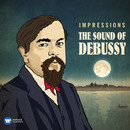
Impressions - The Sound Of Debussy
Claude DebussyCD1
- Suite bergamasque, L 82 (1890, rev. 1905) – III. Clair de lune
- Suite bergamasque, L 82 (1890, rev. 1905) – IV. Passepied
- Arabesques, L 74 (1890-91) - I.
- Arabesques, L 74 (1890-91) - II.
- Estampes, L 108 (1903): III. Jardins sous la pluie
- Valse romantique, L 79 (1890-91)
- Pour le piano, L 95 (1896 [II], 1901 [I, III]) - I. Prélude
- Pour le piano, L 95 (1896 [II], 1901 [I, III]) - II. Sarabande
- Pour le piano, L 95 (1896 [II], 1901 [I, III]) - III. Toccata
- Images (First Book), L 105 (1901-1905) - III. Mouvement
- Images (Second Book), L 120 (1907) - I. Cloches à travers les feuilles
- Images (Second Book), L 120 (1907) - III. Poissons d’or
- Préludes (First Book), L 125 (1909-10) - VI. (… des pas sur la neige)
- Préludes (First Book), L 125 (1909-10) - VIII. (… la fille aux cheveux de lin)
- (First Book), L 125 (1909-10) - X. (… La Cathédrale engloutie)
- Préludes (First Book), L 125 (1909-10) - XII. (… Minstrels)
- Préludes (Second Book), L 131 (1912-13) - V. (… Bruyères)
- Préludes (Second Book), L 131 (1912-13) - IX. (… Hommage à S. Pickwick Esq. P.P.M.P.C.)
- Préludes (Second Book), L 131 (1912-13) - XI. (… Les tierces alternées)
- Estampes, L 108a (1903): II. La Soirée dans Grenade
CD2
- Children’s Corner, L 119a: VI. Golliwogg’s cake-walk (1908)
- La plus que lente, valse, L 128a (1910)
- L’Isle joyeuse, L 109a (1903-04)
- Douze Études, L 143a (1915) - Second Book - I. Pour les degrés chromatiques
- Études, L 143a (1915) - Second Book - II. Pour les agréments
- Études, L 143a (1915) - Second Book - V. Pour les arpèges composés
- Khamma, légende dansée, L 132b (1911-12, réduction Debussy) Scène 3: « C’est l’aube froide et grise »
- Trio for piano, violin and cello in G, L 5 (1880): IV. Finale: Appassionato
- String Quartet in G minor, Op. 10, L 91 (1892-93) - I. Animé et très décidé
- Première Rapsodie, for clarinet and piano in B-flat, L 124a (1909-10)
- Syrinx, for solo flute, L 137 (1913)
- Sonata for flute, viola and harp, L 145 (1915): III. Finale
- Masques, L 110 (1903-04)
- Fête galante (Théodore de Banville), L 31 (1882)
- Chanson des brises, for soprano, choir of women voices and piano four hands (Louis Bouilhet), L 32 (1882)
CD3
- Deux Danses, for cross-strung harp and strings, L 113a (1904) - Danse profane
- Prélude à l’après-midi d’un faune, for orchestra, L 87a (1892-94)
- Petite suite, L 71b (1888-89, orchestration Henri Büsser 1907) - I. En bateau
- Petite suite, L 71b (1888-89, orchestration Henri Büsser 1907) - II. Cortège
- Petite suite, L 71b (1888-89, orchestration Henri Büsser 1907) - IV. Ballet
- Nocturnes, triptyque symphonique, for orchestra and female choir, L 98a (1897-99) - Nuages (Modéré – Un peu animé)
- Nocturnes, triptyque symphonique, for orchestra and female choir, L 98a (1897-99) - Fêtes (Animé et très rythmé – Modéré mais toujours très rythmé)
- La Mer, trois esquisses symphoniques, for orchestra, L 111a (1903-05) - I. De l’aube à midi sur la mer (Très lent)
- La Mer, trois esquisses symphoniques, for orchestra, L 111a (1903-05) - II. Jeux de vagues (Allegro, dans un rythme très souple)
- Images for orchestra, L 118a - III. Rondes de printemps (1905-09)
- Children’s Corner, L 119b (1906-1908, orchestration André Caplet 1910) - III. Serenade for the doll
- Erik Satie 1866-1925 : Gymnopédie (No. 1) (1888, orchestration Claude Debussy 1896)
“Music would take over at the point at which words become powerless, with the one and only object of expressing that which nothing but music could express… I love music passionately. And because I love it I try to free it from barren traditions that stifle it... There is no theory. You only have to listen. Pleasure is the law”.
Claude Debussy