
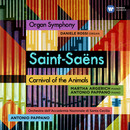
Saint-Saëns: Organ Symphony and The Carnival of the Animals
Daniele Rossi, Martha Argerich, Antonio Pappano, Orchestra dell’Accademia Nazionale di Santa Cecilia- Symphony No. 3 in C minor Op. 78 ‘Organ Symphony’: Adagio - Allegro moderato
- Symphony No. 3 in C minor Op. 78 ‘Organ Symphony’: Poco Adagio
- Symphony No. 3 in C minor Op. 78 ‘Organ Symphony’: Allegro moderato – Presto
- Symphony No. 3 in C minor Op. 78 ‘Organ Symphony’: Maestoso – Allegro
- Carnival of the Animals, zoological fantasy for 2 pianos & ensemble: i. Introduction and royal march of the lion
- Carnival of the Animals, zoological fantasy for 2 pianos & ensemble: ii. Cocks and hens
- Carnival of the Animals, zoological fantasy for 2 pianos & ensemble: iii. Wild asses
- Carnival of the Animals, zoological fantasy for 2 pianos & ensemble: iv. Tortoises
- Carnival of the Animals, zoological fantasy for 2 pianos & ensemble: v. Elephants
- Carnival of the Animals, zoological fantasy for 2 pianos & ensemble: vi. Kangaroos
- Carnival of the Animals, zoological fantasy for 2 pianos & ensemble: vii. Aquarium
- Carnival of the Animals, zoological fantasy for 2 pianos & ensemble: viii. People with long ears
- Carnival of the Animals, zoological fantasy for 2 pianos & ensemble: ix. Cuckoo in the heart of the woods
- Carnival of the Animals, zoological fantasy for 2 pianos & ensemble: x. Aviary
- Carnival of the Animals, zoological fantasy for 2 pianos & ensemble: xi. Pianists
- Carnival of the Animals, zoological fantasy for 2 pianos & ensemble: xii. Fossils
- Carnival of the Animals, zoological fantasy for 2 pianos & ensemble: xiii. Swan
- Carnival of the Animals, zoological fantasy for 2 pianos & ensemble: xiv. Finale
The pianists are perhaps the most exotic of all the creatures in the Carnival of the Animals. A very rare and treasurable pairing has been made by Warner Classics for this new recording of Saint-Saëns’ enchantingly witty suite: Martha Argerich, often described as the world’s finest example of the pianist species, and Antonio Pappano, a particularly fine specimen of the conductor-pianist.
Beside such natural wonders as the graceful swan, the mighty lion, the waltzing elephant, the iridescent denizens of the aquarium and the rattling fossils, the pianists are the prize exhibits of the Carnival, bringing their colour and virtuosity to all but one of its 14 movements. Their big solo moment comes towards the end of proceedings as they relentlessly practise their scales, which are punctuated with peremptory chords from the strings.
Argerich and Pappano met in Italy for the recording – not in Venice, the city of Carnival, but in Rome, where, since 2005, Pappano has been Music Director of the Orchestra dell'Accademia Nazionale di Santa Cecilia. Nine of its players partner the two star pianists in Saint-Saëns’ suite. In 2012, when Argerich performed Schumann’s Piano Concerto with the Orchestra dell’Accademia Nazionale di Santa Cecilia, Pappano told Euronews that he was 'just knocked over by the amount of energy that she has, but actually what she does is always extremely natural, as if the music can’t go any other way.” Argerich’s daughter, Annie Dutoit also makes a contribution to the Carnival: she recites verses written for the piece by the French actor, singer, humorist Francis Blanche (1921-1974).
The Carnival shares the album release with another of Saint-Saëns’ most celebrated works, the magnificent ‘Organ’ Symphony, No 3. The prominent organ part is played by Daniele Rossi, who also featured on the Pappano/Santa Cecilia recording of Rossini’s Petite Messe Solennelle, released in 2013. Both the Carnival and the Symphony were composed in the same year, 1886, but their aesthetics could hardly be more different. In Spring 2016 the Symphony No. 3 featured on a European tour that Pappano made with the Orchestra dell'Accademia Nazionale di Santa Cecilia. In Germany, the Hamburger Abendblatt reported that the audience responded to the performance of the symphony with “euphoria …stamping on the ground and calling for two encores,” while the Frankfurter Rundschau wrote that “under Pappano’s inspiring direction the Italian musicians captured the reverential, ethereal atmosphere [of the first movement’s Poco adagio] with the same precision as the circus-like uproar of its combined instrumental masses [in the Allegro finale].” This was the last symphony that Saint-Saëns composed, though he lived for a further 35 years. When asked why, he responded: "With it I have given all I could give. What I did I could not achieve again."