
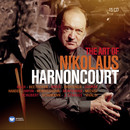
The Art Of Harnoncourt (CD15)
Nikolaus HarnoncourtCD1
- Monteverdi: L'Orfeo - Toccata
- Monteverdi: L'Orfeo - "Dal mio Parnasso"
- Monteverdi: L'Orfeo - "In questo lieto e fortunato giorno"
- Monteverdi: L'Orfeo - "Vieni, Imeneo"
- Monteverdi: L'Orfeo - Act 1 "Muse, onor di Parnasso"
- Monteverdi: L'Orfeo - Act 1 "Lasciate i monti"
- Monteverdi: L'Orfeo - Act 1 "Ma tu, gentil cantor"
- Monteverdi: L'Orfeo - Act 1 "Rosa del ciel"
- Monteverdi: L'Orfeo - Act 1 "Io non dirò qual sia"
- Monteverdi: L'Orfeo - Act 1 "Lasciate i monti"
- Monteverdi: L'Orfeo - Act 1 "Vieni, Imeneo"
- Monteverdi: L'Orfeo - Act 1 "Ma se il nostro gioir"
- Monteverdi: L'Orfeo - Act 1 "Alcun non sia che disperato"
- Monteverdi: L'Orfeo - Act 1 "Ecco Orfeo"
- Monteverdi: L'Orfeo - Act 2 "Ecco pur ch'a voi ritorno"
- Monteverdi: L'Orfeo - Act 2 "In questo prato"
- Monteverdi: L'Orfeo - Act 2 "Vi ricorda"
- Monteverdi: L'Orfeo - Act 2 "Mira, deh mira"
- Monteverdi: L'Orfeo - Act 2 "Lassa, dunque debb'io"
- Monteverdi: L'Orfeo - Act 2 "Donde vieni?"
- Monteverdi: L'Orfeo - Act 2 "Ahi, caso acerbo"
- Monteverdi: L'Orfeo - Act 2 "Tu se' morta"
- Monteverdi: L'Orfeo - Act 2 "Ahi, caso acerbo"
- Monteverdi: L'Orfeo - Act 2 "Ma io, che in questa lingua"
- Monteverdi: L'Orfeo - Act 2 Sinfonia
- Monteverdi: L'Orfeo - Act 2 "Chi ne consola, ahi lassi?"
- Monteverdi: L'Orfeo - Act 2 Ritornello
CD2
- Monteverdi: L'Orfeo - Act 3 Sinfonia
- Monteverdi: L'Orfeo - Act 3 "Scorto da te, mio nume"
- Monteverdi: L'Orfeo - Act 3 "Ecco l'atra palude"
- Monteverdi: L'Orfeo - Act 3 "Dove, ah, dove ten'vai"
- Monteverdi: L'Orfeo - Act 3 "O tu, ch'inanzi morte"
- Monteverdi: L'Orfeo - Act 3 Sinfonia
- Monteverdi: L'Orfeo - Act 3 "Possente spirito"
- Monteverdi: L'Orfeo - Act 3 "Ben mi lusinga"
- Monteverdi: L'Orfeo - Act 3 "Ahi, sventurato amante!"
- Monteverdi: L'Orfeo - Act 3 Sinfonia
- Monteverdi: L'Orfeo - Act 3 "Ei dorme, e la mia cetra"
- Monteverdi: L'Orfeo - Act 3 Sinfonia
- Monteverdi: L'Orfeo - Act 3 "Nulla impresa per uom"
- Monteverdi: L'Orfeo - Act 3 Sinfonia
- Monteverdi: L'Orfeo - Act 4 "Signor, quell'infelice"
- Monteverdi: L'Orfeo - Act 4 "Benché servo"
- Monteverdi: L'Orfeo - Act 4 "O de gli abitator"
- Monteverdi: L'Orfeo - Act 4 "Quali grazie ti rendo"
- Monteverdi: L'Orfeo - Act 4 "Tue soavi parole"
- Monteverdi: L'Orfeo - Act 4 "Pietade, oggi, e amore"
- Monteverdi: L'Orfeo - Act 4 "Quale onor di te fia degno"
- Monteverdi: L'Orfeo - Act 4 "Rott'hai la legge"
- Monteverdi: L'Orfeo - Act 4 "Ahi, vista troppo dolce"
- Monteverdi: L'Orfeo - Act 4 "Trona a l'ombre"
- Monteverdi: L'Orfeo - Act 4 "Dove ten'vai"
- Monteverdi: L'Orfeo - Act 4 Sinfonia
- Monteverdi: L'Orfeo - Act 4 "É la virtute un raggio"
- Monteverdi: L'Orfeo - Act 4 Sinfonia
- Monteverdi: L'Orfeo - Act 5 Ritornello
- Monteverdi: L'Orfeo - Act 5 "Questi i campi di Tracia"
- Monteverdi: L'Orfeo - Act 5 Sinfonia
- Monteverdi: L'Orfeo - Act 5 "Perchè a lo sdegno"
- Monteverdi: L'Orfeo - Act 5 "Vanne, Orfeo"
- Monteverdi: L'Orfeo - Act 5 Moresca
CD3
- Biber: Sonata 3 a 5
- Biber: Sonata prima a 8
- Biber: Ballatae a 4 Nos 1 – 7
- Biber: Battalia in D major
- Biber: Sonata a 7
- Biber: Sonata 4 a 5
- Biber: Sonata seconda a 8
- Biber: Sonata a 6, 'Die Pauern Kirchfahrt genandt'
CD4
- Vivaldi: The Four Seasons - Violin Concerto in E major Op.8 No.1 RV269, 'Spring' : I Allegro
- Vivaldi: The Four Seasons - Violin Concerto in E major Op.8 No.1 RV269, 'Spring' : II Largo
- Vivaldi: The Four Seasons - Violin Concerto in E major Op.8 No.1 RV269, 'Spring' : III Allegro
- Vivaldi: The Four Seasons - Violin Concerto in G minor Op.8 No.2 RV315, 'Summer' : I Allegro non molto
- Vivaldi: The Four Seasons - Violin Concerto in G minor Op.8 No.2 RV315, 'Summer' : II Adagio
- Vivaldi: The Four Seasons - Violin Concerto in G minor Op.8 No.2 RV315, 'Summer' : III Presto
- Vivaldi: The Four Seasons - Violin Concerto in F major Op.8 No.3 RV293, 'Autumn' : I Allegro
- Vivaldi: The Four Seasons - Violin Concerto in F major Op.8 No.3 RV293, 'Autumn' : II Adagio molto
- Vivaldi: The Four Seasons - Violin Concerto in F major Op.8 No.3 RV293, 'Autumn' : III Allegro
- Vivaldi: The Four Seasons - Violin Concerto in F minor Op.8 No.4 R297, 'Winter' : I Allegro non molto
- Vivaldi: The Four Seasons - Violin Concerto in F minor Op.8 No.4 R297, 'Winter' : II Largo
- Vivaldi: The Four Seasons - Violin Concerto in F minor Op.8 No.4 R297, 'Winter' : III Allegro
- Vivaldi: Violin Concerto in E flat major Op.8 No.5 RV523, 'La tempesta di mare' : I Presto
- Vivaldi: Violin Concerto in E flat major Op.8 No.5 RV523, 'La tempesta di mare' : II Largo
- Vivaldi: Violin Concerto in E flat major Op.8 No.5 RV523, 'La tempesta di mare' : III Presto
- Vivaldi: Violin Concerto in C major Op.8 No.6 RV180, 'Il piacere' : I Allegro
- Vivaldi: Violin Concerto in C major Op.8 No.6 RV180, 'Il piacere' : II Largo
- Vivaldi: Violin Concerto in C major Op.8 No.6 RV180, 'Il piacere' : III Allegro
CD5
- Bach: Cantata No.80 Ein feste Burg ist unser Gott BWV80 : I Chorus - "Ein feste Burg ist unser Gott"
- Bach: Cantata No.80 Ein feste Burg ist unser Gott BWV80 : II Aria - "Mit unser Macht"
- Bach: Cantata No.80 Ein feste Burg ist unser Gott BWV80 : III Recitative - "Erwäge doch, Kind Gottes"
- Bach: Cantata No.80 Ein feste Burg ist unser Gott BWV80 : IV Aria - "Komm in mein Herzenshaus"
- Bach: Cantata No.80 Ein feste Burg ist unser Gott BWV80 : V Chorale - "Und wenn die Welt voll Teufel wär"
- Bach: Cantata No.80 Ein feste Burg ist unser Gott BWV80 : VI Recitative - "So stehe denn bei Christi blutgefärbten Fahne"
- Bach: Cantata No.80 Ein feste Burg ist unser Gott BWV 80: VII. Duet - "Wie selig sind doch die"
- Bach: Cantata No.80 Ein feste Burg ist unser Gott BWV80 : VIII Chorale - "Das Wort sie sollen lassen stahn"
- Bach: Cantata No.81 Jesus schläft, was soll ich hoffen? BWV81 : I Aria - "Jesus schläft, was soll ich hoffen?"
- Bach: Cantata No.81 Jesus schläft, was soll ich hoffen? BWV81 : II Recitative - "Herr! warum trittest du so ferne?"
- Bach: Cantata No.81 Jesus schläft, was soll ich hoffen? BWV81 : III Aria - "Die schäumenden Wellen von Belials Bächen"
- Bach: Cantata No.81 Jesus schläft, was soll ich hoffen? BWV81 : IV Aria - "Ihr Kleingläubigen, warum seid ihr so furchtsam?"
- Bach: Cantata No.81 Jesus schläft, was soll ich hoffen? BWV81 : V Aria - "Schweig, aufgetürmtes Meer!"
- Bach: Cantata No.81 Jesus schläft, was soll ich hoffen? BWV81 : VI Recitative - "Wohl mir, mein Jesus spricht ein Wort"
- Bach: Cantata No.81 Jesus schläft, was soll ich hoffen? BWV81 : VII Chorale - "Unter deinen Schirmen"
- Bach: Cantata No.82 Ich habe genung BWV82 : I. Ich habe genug
- Bach: Cantata No.82 Ich habe genung BWV82 : II Recitative - "Ich habe genung! Mein Trost ist nur allein"
- Bach: Cantata No.82 Ich habe genung BWV82 : III Aria - "Schlummert ein, ihr matten Augen"
- Bach: Cantata No.82 Ich habe genung BWV82 : IV Recitative - "Mein Gott! wann kommt das schöne - Nun!"
- Bach: Cantata No.82 Ich habe genung BWV82 : V Aria - "Ich freue mich auf meinen Tod"
- Bach: Cantata No. 83 Erfreute Zeit im neuen Bunde BWV83 : I Aria - "Erfreute Zeit im neuen Bunde"
- Bach: Cantata No. 83 Erfreute Zeit im neuen Bunde BWV83 : II Aria & Recitative - "Herr, nun lässet du deinen Diener in Friede fahren"
- Bach: Cantata No. 83 Erfreute Zeit im neuen Bunde BWV83 : III Aria - "Eile, Herz, voll Freudigkeit"
- Bach: Cantata No. 83 Erfreute Zeit im neuen Bunde BWV83 : IV Recitative - "Ja, merkt dein Glaube noch viel Finsternis"
- Bach: Cantata No. 83 Erfreute Zeit im neuen Bunde BWV83 : V Chorale - "Er ist das Heil und selig Licht"
CD6
- Handel: Water Music : Overture : Grave-Allegro
- Handel: Water Music : Adagio e staccato
- Handel: Water Music : (Allegro) - Andante
- Handel: Water Music : (Menuet)
- Handel: Water Music : Air
- Handel: Water Music : (Menuet) II
- Handel: Water Music : Bourrée
- Handel: Water Music : Hornpipe I
- Handel: Water Music : (Andante)
- Handel: Water Music : (Allegro)
- Handel: Water Music : VIII Hornpipe
- Handel: Water Music : (Menuet) III
- Handel: Water Music : Aria (Bourrée)
- Handel: Water Music : Lentement (Loure)
- Handel: Water Music : Air (Bourrée)
- Handel: Water Music : Menuet
- Handel: Water Music : (Air)
- Handel: Water Music : (Gigue I)
- Handel: Water Music : (Gigue II)
- Handel: Water Music : Coro
- Handel: Organ Concerto No.15 in D minor HWV304 : I Andante
- Handel: Organ Concerto No.15 in D minor HWV304 : II Adagio - Organo ad libitum, e poi una Fuga allegro ad libitum
- Handel: Organ Concerto No.15 in D minor HWV304 : III Allegro
- Handel: Organ Concerto in F major, HWV 295 "The Cuckoo amd the Nightingale" : I Larghetto
- Handel: Organ Concerto in F major, HWV 295 "The Cuckoo amd the Nightingale" : II Allegro
- Handel: Organ Concerto in F major, HWV 295 "The Cuckoo amd the Nightingale" : III Organo ad libitum
- Handel: Organ Concerto in F major, HWV 295 "The Cuckoo amd the Nightingale" : IV Larghetto
- Handel: Organ Concerto in F major, HWV 295 "The Cuckoo amd the Nightingale" : V Allegro
CD7
- Haydn: Symphony No.30 in C major, 'Alleluja' : I Allegro
- Haydn: Symphony No.30 in C major, 'Alleluja' : II Andante
- Haydn: Symphony No.30 in C major, 'Alleluja' : III Finale - Tempo di menuet, più tosto allegretto
- Haydn: Symphony No.53 in D major, 'L'Impériale' : I Largo maestoso - Vivace
- Haydn: Symphony No.53 in D major, 'L'Impériale' : II Andante
- Haydn: Symphony No.53 in D major, 'L'Impériale' : III Menuet - Trio
- Haydn: Symphony No.53 in D major, 'L'Impériale' : IV Finale - Capriccio - Moderato
- Haydn: Symphony No.69 in C major, 'Loudon' : I Allegro vivace
- Haydn: Symphony No.69 in C major, 'Loudon' : II Un poco adagio, più tosto andante
- Haydn: Symphony No.69 in C major, 'Loudon' : III Minuetto - Trio
- Haydn: Symphony No.69 in C major, 'Loudon' : IV Finale - Presto
CD8
- Mozart: "Mia speranza adorata!... Ah non sai qual pena sia" K416
- Mozart: "Voi avete un cor fedele" K217
- Mozart: "No, che non sei capace" K419
- Mozart: "Ma che vi fece, o stelle... Sperai vicino il lido" K368
- Mozart: "Misera, dove son!... Ah! non son io che parlo" K369
- Mozart: "A questo seno deh vieni... Or che il cielo a me ti rende" K374
- Mozart: "Vorrei spiegarvi, oh Dio!" K418
- Mozart: "Ah se in ciel, benigne stelle" K538
CD9
- Beethoven: Symphony No.2 in D major Op.36 : I Adagio molto - Allegro con brio
- Beethoven: Symphony No.2 in D major Op.36 : II Larghetto
- Beethoven: Symphony No.2 in D major Op.36 : III Scherzo - Allegro
- Beethoven: Symphony No.2 in D major Op.36 : IV Allegro molto
- Beethoven: Symphony No. 5 in C Minor, Op. 67: I. Allegro con brio
- Beethoven: Symphony No. 5 in C Minor, Op. 67: II. Andante con moto
- Beethoven: Symphony No.5 in C minor Op.67 : III Allegro
- Beethoven: Symphony No.5 in C minor Op.67 : IV Allegro
CD10
- Mendelssohn: Die Schöne Melusine, op.32
- Schubert : Symphony No.4 in C minor D417 - 1 Adagio molto - Allegro vivace
- Schubert : Symphony No.4 in C minor D417 - 2 Andante
- Schubert : Symphony No.4 in C minor D417 - 3 Menuetto: Allegro vivace
- Schubert : Symphony No.4 in C minor D417 - 4 Allegro
- Schumann : Symphony No.4 in D minor Op.120 - 1 Ziemlich langsam - lebhaft
- Schumann : Symphony No.4 in D minor Op.120 - 2 Romanze : ziemlich langsam
- Schumann : Symphony No.4 in D minor Op.120 : III Scherzo - Lebhaft
- Schumann : Symphony No.4 in D minor Op.120 : IV Langsam - Lebhaft
CD11
- Mendelssohn: A Midsummer Night's Dream Op.21 : Overture
- Mendelssohn: A Midsummer Night's Dream Op.61 : Act 2 Entr'acte - Scherzo
- Mendelssohn: A Midsummer Night's Dream Op.61 : Act 2 Song with Chorus
- Mendelssohn: A Midsummer Night's Dream Op.61 : Act 2 Intermezzo
- Mendelssohn: A Midsummer Night's Dream Op.61 : Act 3 Nocturne
- Mendelssohn: A Midsummer Night's Dream Op.61 : Act 4 Wedding March
- Mendelssohn: A Midsummer Night's Dream Op.61 : Act 5 Dance of the Rustics
- Mendelssohn: A Midsummer Night's Dream Op.61 : Act 5 Finale
- Mendelssohn: The First Walpurgis Night Op.60 : Overture
- Mendelssohn: The First Walpurgis Night Op.60 : "Es lacht der Mai"
- Mendelssohn: The First Walpurgis Night Op.60 : "Konnt ihr so verwegen handeln?"
- Mendelssohn: The First Walpurgis Night Op.60 : "Wer Opfer heut zu bringen scheut"
- Mendelssohn: The First Walpurgis Night Op.60 : "Verteilt euch, wackre Männer, hier"
- Mendelssohn: The First Walpurgis Night Op.60 : "Diese dumpfen Pfaffenchristen"
- Mendelssohn: The First Walpurgis Night Op.60 : "Kommt mit Zacken und mit Gabeln"
- Mendelssohn: The First Walpurgis Night Op.60 : "Kommt mit Zacken und mit Gabeln"
- Mendelssohn: The First Walpurgis Night Op.60 : "So weit gebracht, daß wir bei Nacht"
- Mendelssohn: The First Walpurgis Night Op.60 : "Hilf, ach hilf mir, Kriegsgeselle"
- Mendelssohn: The First Walpurgis Night Op.60 : "Die Flamme reinigt sich vom Rauch"
CD12
- Schumann: Piano Concerto in A Minor, Op. 54: I. Allegro affettuoso
- Schumann: Piano Concerto in A minor Op.54 : II Intermezzo - Andantino grazioso
- Schumann: Piano Concerto in A minor Op.54 : III Allegro vivace
- Schumann: Violin Concerto in D minor Op. posth : I In kräftigem, nicht zu schnellem Tempo
- Schumann: Violin Concerto in D minor Op. posth : II Langsam
- Schumann: Violin Concerto in D minor Op. posth : III Lebhaft, doch nicht schnell
CD13
- Bruckner: Allegro moderato - Symphony No.7 in E major
- Bruckner: Adagio: Sehr feierlich und sehr langsam - Symphony No.7 in E major
- Bruckner: Scherzo: Sehr schnell - Trio: Etwas langsamer - Symphony No.7 in E major
- Bruckner: Finale: Bewegt, doch nicht schnell - Symphony No.7 in E major
CD14
- Dvořák: Symphony No. 9 in E Minor, Op. 95, 'From the New World': I. Adagio - Allegro molto
- Dvořák: Symphony No. 9 in E Minor, Op. 95, 'From the New World': II. Largo
- Dvořák: Symphony No. 9 in E Minor, Op. 95, 'From the New World': III Scherzo - Molto vivace
- Dvořák: Symphony No. 9 in E Minor, Op. 95, 'From the New World': IV Allegro con fuoco
- Dvořák: The Water Goblin Op.107
CD15
- Johann Strauss II: Der Zigeunerbaron : Overture to Act 1
- Johann Strauss II: Kreuzfidel Op.301
- Johann Strauss II: Leichtes Blut Op.319
- Johann Strauss II: G'schichten aus dem Wienerwald Op.325
- Johann Strauss II: Egyptischer Marsch Op.335
- Johann Strauss II: Wiener Bonbons Op.307
- Johann Strauss II: Pizzicato Polka
- Johann Strauss II: Unter Donner und Blitz Op.324
- Johann Strauss II: An der schönen, blauen Donau Op.314
- Johann Strauss II: Die Fledermaus : Overture to Act 1
This 15-CD collection The Art of Harnoncourt, demonstrates the transformative influence that Nikolaus Harnoncourt exercised on musical performance.
As the Guardian wrote in its obituary of the Austrian conductor, who died in March 2016 at the age 86: ”Harnoncourt was one of the most innovative and influential conductors of the second half of the 20th century, bringing the scholarship and sensibility of historical performance to the mainstream repertoire with sometimes controversial, but always illuminating results.”
The Art of Harnoncourt draws on the rich and extensive Warner Classics catalogue that the conductor built up over several decades. It shows him in music that spans eras from the late Renaissance to Romanticism by way of the Baroque and Classical, with works by: Monteverdi (a complete recording of L’Orfeo); Biber; Vivaldi (including The Four Seasons), Bach (several cantatas from the complete cycle entrusted to Harnoncourt and Gustav Leonhardt by the Telefunken label); Handel; Haydn; Mozart; Beethoven; Mendelssohn; Schubert, Schumann; Bruckner, Dvořák and Johann Strauss.
While Harnoncourt originally established his reputation with the pioneering ensemble Concentus Musicus Wien – dedicated to historically informed performance and founded by Harnoncourt and his violinist wife Alice in the 1950s – the collection also features several of the major modern-instrument orchestras with which he developed a close relationship: the Royal Concertgebouw Orchestra, the Chamber Orchestra of Europe and the Berliner Philharmoniker. Soloists who appear in the collection include Martha Argerich, Gidon Kremer, Alice Harnoncourt, Edita Gruberová, Cathy Berberian, Thomas Hampson and René Pape.
Nikolaus Harnoncourt was born in 1929 in Berlin into a noble family. He grew up in Graz, Austria and trained as a cellist in Vienna, also playing the viola da gamba. He spent most of the 1950s and 60s as a member of the Vienna Symphony Orchestra, but rebelled against the practice of taking a Romantic approach to music from every era and rejected the idea of the conductor as autocrat. In his own work as a conductor he preferred to treat the orchestral musicians as colleagues.
His approach to a score can be summed in a comment he made in 1954. He spoke of the need to perform Bach’s masterpieces “as if they had never been interpreted before”. No matter what the era of a score’s genesis, he searched out original manuscripts and orchestral parts in order to gain a deep understanding of the composer’s intentions and the performing style of the composer’s time. His interpretations sometimes challenged the expectations of tradition, but in the 1990s he achieved a new prominence and authority through his regular appearances at one of the world’s powerhouses of classical music, the Salzburg Festival, from which he had been absent over the years in which Herbert von Karajan was its driving force.
As Sir Nicholas Kenyon of London’s Barbican Centre – a former journalist with a special interest in pre-Classical music – wrote in Gramophone after Harnoncourt’s death: “He wanted to explore why composers made their music sound as it did, to understand what their intentions were, to react to the instruments they used and to their sonorities, and to see how they could best be created anew in our time. He did not believe in ‘authenticity’ as such, and never used the word. Instead he questioned ‘tradition’ as laziness [as] Mahler had before him.”