
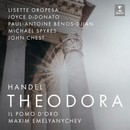
Handel: Theodora
Lisette Oropesa,Joyce DiDonato, Michael Spyres,, Il Pomo d'Oro, Maxim EmelyanychevCD1
- Ouverture
- Trio
- Courante
- Part I, Scene I: Recitative: ’Tis Diocletian’s natal day (Valens)
- Part I, Scene I: Air: Go, my faithful soldier, go (Valens)
- Part I, Scene I: Chorus: And draw a blessing down
- Part I, Scene I: Recitative: Vouchsafe, dread Sir (Didymus, Valens)
- Part I, Scene I: Air: Racks, gibbets, sword and fire (Valens)
- Part I, Scene I: Chorus: For ever thus stands fix’d the doom
- Part I, Scene II: Recitative: Most cruel edict (Didymus, Septimius)
- Part I, Scene II: Air: The raptur’d soul (Didymus)
- Part I, Scene II: Recitative: I know thy virtues (Septimius)
- Part I, Scene II: Air: Descend, kind pity, heav’nly guest (Septimius)
- Part I, Scene III: Recitative: Though hard, my friends (Theodora)
- Part I, Scene III: Air: Fond, flatt’ring world, adieu (Theodora)
- Part I, Scene III: Recitative: O bright example of all goodness (Irene)
- Part I, Scene III: Air: Bane of virtue (Irene)
- Part I, Scene III: Chorus: Come, mighty Father
- Part I, Scene IV: Recitative: Fly, fly, my brethren (Messenger, Irene)
- Part I, Scene IV:: Air: As with rosy steps the morn (Irene)
- Part I, Scene IV: Chorus: All pow’r in heav’n above
- Part I, Scene V: Recitative: Mistaken wretches! (Septimius)
- Part I, Scene V: Air: Dread the fruits of Christian folly (Septimius)
- Part I, Scene V: Recitative: Deluded mortal! (Theodora, Septimius)
- Part I, Scene V: Accompagnato: Oh, worse than death indeed (Theodora)
- Part I, Scene V: Air: Angels, ever bright and fair (Theodora)
- Part I, Scene VI: Recitative: Unhappy, happy crew! (Didymus, Irene)
- Part I, Scene VI: Air: Kind Heav’n, if virtue be thy care (Didymus)
- Part I, Scene VI: Recitative: O love, how great thy pow’r! (Irene)
- Part I, Scene VI: Chorus: Go, gen’rous, pious youth
CD2
- Part II, Scene I: Recitative: Ye men of Antioch (Valens)
- Part II, Scene I: Chorus: Queen of summer, queen of love
- Part II, Scene I: Air: Wide spread his name (Valens)
- Part II, Scene I: Recitative: Return, Septimius, to the stubborn maid (Valens)
- Part II, Scene I: Chorus: Venus, laughing from the skies
- Part II, Scene II: Symphony
- Part II, Scene II: Recitative: O thou bright sun (Theodora)
- Part II, Scene II: Air: With darkness deep, as is my woe (Theodora)
- Part II, Scene II: Air
- Part II, Scene II: Recitative: But why art thou disquieted, my soul (Theodora)
- Part II, Scene II: Air: Oh that I on wings could rise (Theodora) 122
- Part II, Scene III: Recitative: Long have I known (Didymus, Septimius)
- Part II, Scene III: Air: Though the honours (Septimius)
- Part II, Scene III: Recitative: Oh, save her then (Didymus, Septimius) 133
- Part II, Scene III: Air: Deeds of kindness to display (Didymus)
- Part II, Scene IV: Recitative: The clouds begin to veil (Irene)
- Part II, Scene IV: Air: Defend her, Heav’n! (Irene)
- Part II, Scene V: Recitative: Or lull’d with grief (Didymus)
- Part II, Scene V: Air: Sweet rose and lily (Didymus)
- Part II, Scene V: Recitative: Oh, save me, Heav’n (Theodora, Didymus)
- Part II, Scene V: Air: The pilgrim’s home (Theodora)
- Part II, Scene V: Accompagnato: Forbid it, Heav’n! (Didymus)
- Part II, Scene V: Recitative: Or say, what right have I to take (Didymus, Theodora)
- Part II, Scene V: Duet: To thee, thou glorious son of worth (Theodora, Didymus)
- Part II, Scene VI:Recitative: ’Tis night (Irene)
- Part II, Scene VI: Chorus: He saw the lovely youth
CD3
- Part III, Scene I: Air: Lord, to thee each night and day (Irene)
- Part III, Scene II: Recitative: But see, the good, the virtuous Didymus (Irene, Theodora)
- Part III, Scene II: Air: When sunk in anguish and despair (Theodora)
- Part III, Scene II: Theodora and Chorus: Blest be the hand, and blest the pow’r
- Part III, Scene III: Recitative: Undaunted in the court (Messenger, Irene)
- Part III, Scene III: Accompagnato: O my Irene (Theodora)
- Part III, Scene III: Recitative: Stay me not, dear friend (Theodora)
- Part III, Scene III: Duet: Whither, princess, do you fly (Irene, Theodora)
- Part III, Scene III: Recitative: She’s gone (Irene)
- Part III, Scene III: Air: New scenes of joy come crowding on (Irene)
- Part III, Scene IV: Recitative: And is it a Christian virtue (Valens, Didymus, Theodora, Septimius)
- Part III, Scene V: Recitative: Be that my doom (Theodora, Septimius)
- Part III, Scene V: Air: From virtue springs each gen’rous deed (Septimius)
- Part III, Scene V: Air: Cease, ye slaves, your fruitless pray’r (Valens)
- Part III, Scene V: Recitative: ’Tis kind, my friends (Didymus, Theodora)
- Part III, Scene V: Chorus: How strange their ends, yet how glorious
- Part III, Scene V: Recitative: On me your frowns (Didymus, Theodora, Valens)
- Part III, Scene V: Air: Ye ministers of justice (Valens)
- Part III, Scene VI: Recitative: And must such beauty suffer? (Didymus, Theodora, Septimius)
- Part III, Scene VI: Air and Duet: Streams of pleasure ever flowing (Didymus, Theodora)
- Part III, Scene VII: Recitative: Ere this, their doom is past (Irene)
- Part III, Scene VII: Chorus: O love divine
• True cast of stars for this recording of Handel’s masterpiece Theodora: Lisette Oropesa in the title role; Joyce DiDonato as Irene; Michael Spyres as Septimius; John Chest as Valens; Paul-Antoine Bénos-Djian as Didymus
• With Il Pomo d'Oro orchestra and choir and conducted by Maxim Emelyanychev
• This follows the acclaimed recording of Agrippina, also with the winning team of Joyce, Maxim, and Il Pomo d’Oro – Gramophone Editor’s Choice of March 2021
• A dramatic oratorio in three acts set to an English libretto by Thomas Morell, Theodora (HWV 68) concerns the Christian martyr Theodora and her Christian-converted Roman lover, Didymus
• Not repertoire that has been recorded often – this new version will delight Handel fans worldwide!
• Great critical acclaim for the performances in Europe and at the Royal Opera House; German Opernglas called the cast a "Luxusbesetzung"
• "…the stage is dominated by the almost overwhelming presence of Joyce DiDonato. Physical presence, on the one hand, notably in the visual communication maintained with the choir … Vocal presence, on the other hand, so much the mezzo impresses by the depth of her commitment, the absolute mastery of her singing, the imagination and the audacity of her ornaments. Dramatic presence, one would have to add, by the incredible projection of the text … From a character of little
theatrical interest, she ends up being the pillar of the work.” – Res Musica