
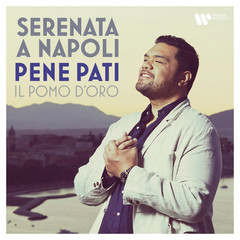
Serenata a Napoli
Pene Pati, Il Pomo d’Oro- EDUARDO DI CAPUA - 'O sole mio
- MARIO PASQUALE COSTA - Napulitanata
- EDUARDO DI CAPUA - Maria Marì
- ANTONELLO PALIOTTI - Variazioni sul basso di tarantella, I. Preludio
- ANTONELLO PALIOTTI - Variazioni sul basso di tarantella, II. Variazioni
- MARIO PASQUALE COSTA - Era de maggio
- FRANCESCO PAOLO TOSTI - 'A vucchella
- FRANCESCO PAOLO TOSTI - Inquietudine
- ENRICO CANNIO - 'O surdato 'nnammurato
- FRANCESCO BUONGIOVANNI - Mandulinata a mare
- PAOLO COSTA - Serenata napoletana
- FRANCESCO PAOLO TOSTI - Romance
- SALVATORE GAMBARDELLA - 'O marenariello
- FRANCESCO PAOLO TOSTI - Marechiaro
- GAETANO LAMA - Silenzio cantatore
- ANTONELLO PALIOTTI - Tarantella storta
- GAETANO LAMA - Reginella
- FRANCESCO BUONGIOVANNI - Palomma 'e notte
- E. A. MARIO - Canzone appassiunata
- ANTONELLO PALIOTTI - Fronna e ballo del pomo d'oro, I. Fronna d'o limone
- ANTONELLO PALIOTTI - Fronna e ballo del pomo d'oro, II. Ballo
- EDUARDO DI CAPUA - I te vurria vasà
- LUIGI DENZA - Funiculì, funiculà
Pene Pati’s glowing tenor voice, described by Le Monde as ‘filled with sunshine’, makes him the ideal interpreter of such roles as Rodolfo in La bohème and the Duke of Mantua in Rigoletto. Now, with Serenata a Napoli, he brings his distinctive warmth to another quintessentially Italian art form, Neapolitan song. In addition to such ‘greatest hits’ as ‘O sole mio’ and ‘Funiculì funiculà’, the golden age of canzone napoletana (1880-1930) produced abundant lyrical expressions of passion, melancholy and joy. Evoking an authentic Neapolitan atmosphere, Pene Pati is joined by eight instrumentalists from Il Pomo d’Oro, led by Naples-born guitarist Antonello Paliotti and playing bowed, plucked and strummed string instruments – and castanets. “I approached these songs in the same way I would approach the traditional songs from my own Samoan heritage,” says Pene Pati. “Whether from Samoa or Napoli, songs like this always tell a story – it’s about love, family, your homeland … It wasn’t just about picking the most popular pieces – it was about finding the songs that evoke the deepest memories and connections. I also wanted to pay as much attention to every detail in respect to the Neapolitan people – the accent, the vibe, the emotions – I wanted to try to make them believe that I was Neapolitan … I worked closely with Il Pomo d’Oro, listening to the words, the stories from Neapolitans, and then shaping my own understanding from there.”