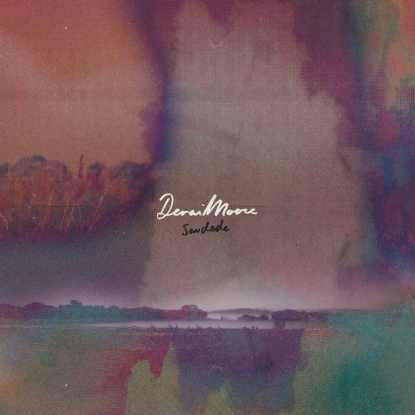
We Used To Bloom
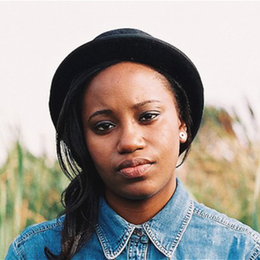 Denai Moore
- Let It Happen
- Desolately Devoted
- Trickle
- Twilight
- Do They Care?
- Leave It Up To You
- Bring You Shame
- Does It Get Easier?
- Poor Person
- All the Way feat. Kwabs
“I think I’m a better version of myself now that I’ve made this record,” says Denai Moore. “It would’ve been so much easier if I’d just done a really simple album. But there’s no point to me in making anything if you’re not trying to become a better version of yourself by the end of it.”
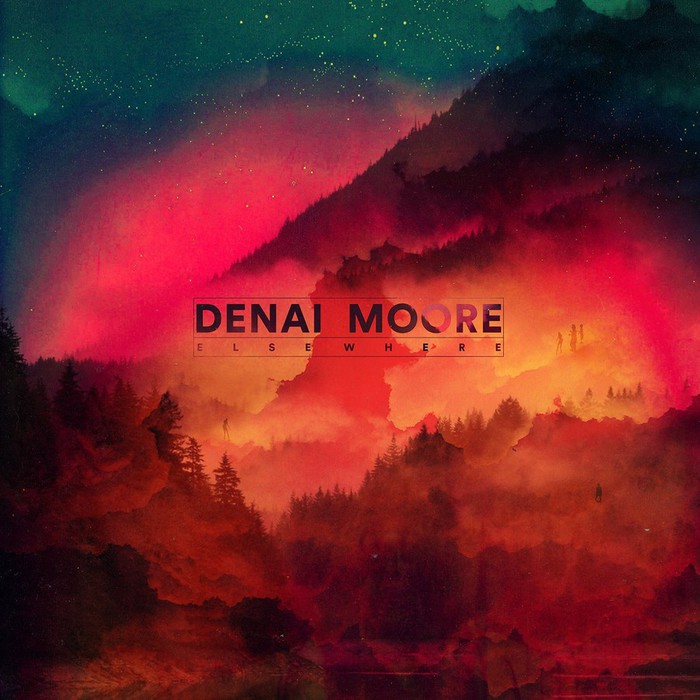
Moore was still a teenager when her music career began — plucked from an early open mic night, the exquisite shape and timbre of her voice met immediate adoration: her first single, Blame, played across Radio 1, 2 and 6Music, and her debut EP brought a stunning appearance on Jools Holland. Her peers, meanwhile — from Plan B to SBTRKT, JMSN, Mr Mitch, Mura Masa, and Astronomyy, were desperate to collaborate. Her debut album, Elsewhere, was rapturously acclaimed.
“At the time it was insane,” she recalls. “I couldn’t believe all that was happening. Jools was something I grew up watching; Plan B was someone we sang in glee club. It felt surreal. It’s amazing how people connected to the music.”
Still just 23, the last couple of years have provided an intense and sometimes painful period of growth for the Jamaican born, Stratford-raised Moore — an experience that she documents with unflinching openness on We Used to Bloom. These 10 songs reveal a young woman figuring out the world and her place in it, while also charting Moore’s evolving relationship with herself — with self-esteem and self-image and the crippling anxiety that, despite her exceptional talent and acclaim, for some while left her feeling that “I just didn’t want to record at all.”
After touring Elsewhere, Moore prepared to make its successor, but each time she went into the studio she found her voice betrayed a deep-rooted anxiety. “It really shook me for quite a while,” she says. It wasn’t that she didn’t love singing or writing songs — rather that she felt bound by a restrictive perfectionism. Moore thought back to one of her favourite records, Lauryn Hill’s unplugged album — a gift from her Father when she was young. The importance of that record lay in its imperfection, in the fact that “she has a breakdown in the middle of it, she’s bawling her eyes out, and her voice is really croaky and she forgets some of the chords. It was groundbreaking to me.”
She stepped back from the sessions, began writing on her own, and developed what she describes as “probably the healthiest relationship I ever had with songwriting.” She spent a lot of time alone, making solo daytrips down to Brighton to quietly read and write. “There are a lot of things and fears I’ve got over, about making music and how I feel about myself,” she says. This process seeps through into these songs: from a sumptuous cover of Elliott Smith’s Twilight to her own track Trickle, in which she deals with anxiety head-on, with “the personal battle with this feeling you know too well.” It was a cathartic experience. “I’ve never written about this before and it was a massive weight off my shoulders,” she says. “I’ve always wanted to write about it, and I think a lot of people can relate to it because people are more open now about mental health issues. I think it is empowering.”
But she sings too of the triumph of this experience. On the sublime album opener Let It Happen she’s revelling in “a celebration of myself, a self-love anthem,” she says. “Before, I always found my value in what other people thought of me, or how other people cared for me. But what I’m saying in this song is whoever comes in and out of my life, and who values me or not, I won’t let it take away anything from me. It’s about reclaiming myself and realising I don’t need that validation from other people. The most important thing is how we feel about ourselves.”
What is particularly notable about Moore’s music — in her early EPs and collaborations, in Elsewhere, and now, too, in We Used to Bloom, is how it defies genre — there are R’n’B influences, certainly, but alongside them stand a love for folk and soul, for Bon Iver and Feist and Solange, for Sufjan Stevens’s The Age of Adz, for the “richness” of Beyonce’s Lemonade, for the fact that “Kanye never made the same record twice”, for the way that St Vincent “really reinvented the idea of being a lead guitarist.” And there too is the girl who learned to play keys alongside her session musician father, the girl who took up guitar and sang at a young age, who spent her childhood in Jamaica listening to the gospel music of the local churches. “And melodically that still influences me,” she says. “It’s a very resonant music. It stays.”
And so to bracket Moore with any one particular scene seems naive —such defiance of genre is crucial for a flourishing British music community. “I feel at the moment in the UK there’s such a budding scene,” she says, “and it’s amazing to see producers exploding out and acts working together. Working with people pushes you. That’s how I learned how to open myself up, how to really think about how I should deliver the songs. I don’t think about genre, because I think it’s reductive, these people are kind of unapologetically being themselves in their music without getting caught up in genre or image.”
Key to We Used to Bloom’s development, and its diverse sound, was producer Steph Marziano. “I met Steph at an event called Girls’ Day,” Moore recalls, “where lots of women from the music industry were giving advice to girls who want to work in music. It was one of the times that shows you how the universe is amazing, and you cross paths with someone at the right time. We just really connected — it was really like recording with my best friend. We had the same intentions for the songs, the same sounds in our heads.”
Among those sounds are the unexpected — one track hears the pair chewing gum; another found its main beat from Moore rolling a stick around on the studio floor. But there was also an unusual approach to more familiar sounds too: early on in the recording, Moore realised that guitars had become “a comfort zone” and requested that Marziano mute them entirely. “It completely changed the frame of the record,” she explains. “It made me think about how the guitar could be integrated on the record, and it pushed me beyond thinking what I was comfortable doing.”
It also re-focused her attention on her voice. “I think my vocal performances are a good example of something I wouldn’t have done before,” she says. “I’m in such a different space that my voice actually sounds different, more emotionally developed; It’s moving away from the idea of performance and perfection and from reverb, so it feels really close. I sound more present on the record. I sound much more present in myself. I think that’s me growing up a lot.”
Elsewhere Moore turns her gaze outward — on Poor Person, for instance, she questions whether wealth should really be measured in material terms, and Bring You Shame she looks at ideas of personal responsibility, at the feeling of “wanting to contribute more and feeling powerless” — ideas that were underscored for Moore last year when she took time out to work in a vegan restaurant in London. “It showed me the environmental impact on the earth and the consequences we have in our everyday lives and the way we spend our money and the influence it has,” she says.
Do You Care, one of the album’s gems, is a song Moore says she was “itching to write for a while” a track that takes the temperature of the times. “It about everything that’s happening right now in the world and how much it was affecting me,” she recalls. “It’s such a weird moment — we hear about things in such a rapid space of time, and we’re made to deal with all these events and tragedies and injustices and suffering and then almost having to move on to the next one.” She wrote the song last summer. “It was the last song I wrote for the album and I had been trying to write it for so long,” she says. “It kept coming out really angry or really sad, so I gave up on the idea and then this song came out really naturally.”
The album’s closing track is an immense, open hearted song written with Kwabs and named All The Way. “I wanted to end the album in an uplifting way,” she says. “It was an incredible song to record — we had a gospel choir and strings, and I think it rounds off all the things I talk about on the record and gives this feeling of resolve. It’s a song I’ve always wanted to write, saying I shouldn’t be too hard on myself, and there’s so much more that can happen, there’s no end to yourself, there’s always room to grow.”
Growth is a recurring theme of this record, a fact Moore attributes to the way her life has changed since her last record. “I think a massive part of the last few years for me has been how I feel about life,” she says. “The infinite possibilities of it. It’s something that really had allowed me to have no fear.”
The album title, she says, is a nod to this feeling. “I chose it because I felt like I’m in the growing aspect of my life,” she explains. “There’s something about blossoming and blooming that I associate with being younger, but now I’m older and I’m really coming to understand myself as a person. We used to bloom; now we grow.”
Track by Track
Let It happen:
Let it happen is a celebration of self-love, and how challenging that journey can be. I used to search for validation and self worth in other people . I think what this song is really saying is that you have to belong to yourself before you belong to anyone else. That really helped me to understand what self-love really means.
Desolately Devoted:
This one is about the force of love and how transformative it is. I think i’ve always been a dismissive person in order to stop the idea that I could get hurt by someone else. This song is about that uncontrollable feeling you control when it finds you, and really never lets go.
Trickle:
Trickle is a song about anxiety as well as the bad habits that I developed because of it. I developed a habit of cancelling all of my plans and really isolating myself from everything. I almost didn’t want to finish writing this song and it took me quite a while to finish the lyrics in general.
Twilight:
I really connect with Elliot Smith and the sheer honesty and emotion that lives in his words/spirit. This is one of my favourite songs of all time, and I just decided to record it in the studio, it wasn’t planned at all.
Do They Care?:
Do they care is a song I wrote about me living with all the injustices happening in the world. In 2015 i found it unbearable and I was very fidgety because it was almost like you’d wake up to death being present. Then you’d carry this information and not necessarily understand how to process it. I think in the reality of it all is that we all want the same things for eachother.
Leave it up to you:
Leave it up to you is about when there is friction in a relationship that is never really addressed but you really feel it. I’ve always been afraid of confrontation and what would happen as the result of it, this song is really about a bad habit of mine.
Bring you shame:
This song is really about the conflict I have sometimes with being human and getting so lost in all my needs which in the grand scheme of things don’t necessarily matter. For a long period of time I struggled with the idea if I was doing enough, it’s so easy to be hard on yourself, it’s easier to be hard on yourself.
Does it get easier?:
This song was another self-reflective song. It’s about how you have to keep peace with the not-knowing element of life and not worry so much about things that are out of control. A lesson that I’m still learning.
Poor Person:
Poor Person is a song I wrote about an observation about how people are always only concerned with becoming richer financially. Whereas I really believe that there are so many areas in life that we should invest more time into being richer in. I think our souls get richer when we learn, unlearn, practice empathy, travel etc. I think it’s something we are really taught enough about.
All the Way:
All The Way is a song that I really wanted to write because it feels like a deep breath in. I wanted to end the album on an uplifting note, this song offers that !