Alamut
 Laibach
CD1
- Overture
- Secret Gardens
- Fedayeen
- Transition
- Meditation I
CD2
- War
- The Doors of perception
- The Metaverse
- Meditation II & Epilogue
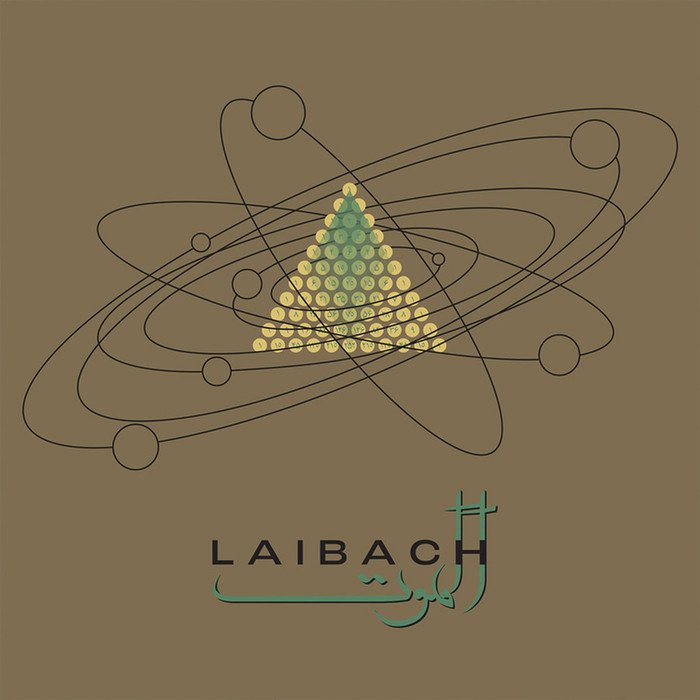
Alamut takes inspiration from the 1938 book of the same name, a retelling of a story from eleventh century Persia by Slovenian writer Vladimir Bartol. The book, about martyrdom and the Cult of Personalities, went on to inspire the video game series Assassin’s Creed, as well as artists such as Umberto Eco, Hawkwind and William S. Burroughs (who referenced the work in Naked Lunch, Nova Express, and The Red Night Trilogy).
The book’s central character is Hassan-i Sabbāh, the charismatic religious and political leader of the Nizari Ismailis who founded the mysterious military formation known as the Hashshashin, or Order of the Assassins. Hassan-i Sabbāh was a self-proclaimed prophet who led a holy war against the Seljuk Empire from his eyrie – the castle of Alamut. Bartol’s novel - known for its maxim “Nothing is true, everything is permitted” - examines the mechanisms of propaganda at a time when their author was witnessing, first hand, the rise of Fascism in Trieste (Italy).
In Laibach’s 9-track retelling of Alamut, these ideas of radical nihilism are interwoven with the classical Persian poetry of Omar Khayyam, while the sensual verses of Mahsati Ganjavi blend with minimalist orchestral colours derived from the Iranian tradition. Hassan-i Sabbāh’s propaganda mechanisms echo in the industrial principle of the workings of the orchestra and Laibach’s unique sound.
The album was recorded at the concert in Križanke Outdoor Theatre, Monastery of the Holy Cross, Ljubljana, by Laibach and the RTV Slovenia Symphony Orchestra, conducted by the Iranian conductor Navid Gohari. Laibach’s firm belief is that “cultural and political differences in these complex times must be overcome through a profoundly open cooperation, against all odds”. The production was expected to premiere in in Tehran, but the current political climate has so far prohibited this. Instead, they invited the Human-Voice Ensemble vocal group from Tehran, who worked alongside two Slovenian ensembles: the Gallina Vocal Group, and AccordiOna, a 60-piece accordion orchestra.
Alamut was composed by Luka Jamnik (Laibach), Idin Samimi Mofakham, and Nima A. Rowshan.